My neighbor Dave called me over last November, panic in his voice. “I can’t see my grass anymore,” he said, pointing to a thick mat of wet, rotting maple leaves. “And my sump pump is running nonstop.” Dave had skipped a few weeks of leaf cleanup, and now his lawn was smothered, water was pooling against his foundation, and snow mold was setting in. Trust me, you don’t want to be Dave. Here’s a straightforward fall lawn cleanup checklist for Indiana homeowners—tailored for places like Greenwood, where clay soil and big trees make things interesting.
Why Fall Cleanup Matters More Here (And When to Start)
In central Indiana—Greenwood, Indianapolis, Carmel, Fishers, and the rest of the metro—we’re in USDA Zone 6a. That means our first frost usually hits mid-to-late October, and leaves start piling up fast. Mature oaks and maples drop tons of leaves every week, and if you let them sit, they mat down into a soggy blanket that kills grass and breeds snow mold. Plus, our heavy clay soil holds water like a sponge, so any debris on the surface just makes drainage worse. A good fall cleanup isn’t about having a perfect lawn—it’s about preventing spring disasters. The window here runs from late September through November: light cleanup in early fall, heavy leaf management and seeding in October, and final winterizing before the ground freezes. (If you’ve ever tried to rake frozen leaves off frozen grass, you know it’s a losing battle.) For a broader look at timing, our spring lawn care schedule might give you context on what follows.
Leaf Management: Don’t Let Leaves Smother Your Lawn
Leaves are the biggest headache for Greenwood homeowners. You’ve got two main options: mulch or remove. For thin layers (like a light dusting), mulching with your mower chops them into tiny pieces that break down and feed the soil. But when you’ve got a canopy of mature trees—like those big maples in parts of Fishers or Zionsville—you get thick mats that mulching just can’t handle. Those need to be removed, either by raking and bagging or using a leaf vacuum service. If you skip removal, the matted leaves trap moisture and block light, creating a perfect home for snow mold that leaves ugly dead patches come spring. And if you’ve got trees with dead branches hanging over your house, that’s a call for a tree service. Not only can a pro trim back limbs to reduce leaf volume, but they’ll also take down anything that might snap under ice in a winter storm. A local tree service in Greenwood or Noblesville can assess your canopy and knock out pruning before leaf drop peaks.
Mowing, Aeration, and Overseeding: Set Up for Spring
Fall is prime time for cool-season lawns like the turf-type tall fescue most of us have around here. Keep mowing at 3 to 3.5 inches through October—don’t scalp it. Then, when growth slows, do a final cut at 2.5 to 3 inches. That short-but-not-too-short height prevents matting without stressing the grass into winter. Now, if your lawn struggles with thin spots or your clay soil feels harder than your driveway, you need core aeration. The best window? Early to mid-fall, when soil temps are between 50 and 65°F. Those little plugs of soil pulled out by the aerator break up compaction from years of foot traffic and parked cars. For homeowners in Avon or Plainfield with heavy clay, aeration isn’t optional—it’s how you get water and air down to the roots. And right after aerating is the perfect time to overseed. Use a turf-type tall fescue blend labeled for Indiana. The seed drops into those aeration holes, gets good soil contact, and if you keep it moist for a couple weeks, you’ll see new growth before the first hard freeze. Just remember: if you overseed, avoid any broadleaf weed killers until the new grass has been mowed at least two or three times.
Feeding, Weeds, and The Fertilizer Dance
Fertilizing in fall is like giving your lawn a savings account for winter. Apply a balanced early-fall fertilizer, then follow up with a “winterizer” high in nitrogen—something like a 24-0-12—after top growth slows but before the ground freezes (usually November). This gives roots the energy to store and come back strong in spring. Don’t guess at numbers; a soil test from the Johnson County Extension can tell you exactly what your lawn needs, especially since our clay tends to hold phosphorus. As for weeds, fall is the best time to spot-treat dandelions and clover. The plants are pulling energy down to their roots, so herbicide hits them hard. But if you’ve just overseeded, skip the weed control until spring—the last thing you want is to kill your new grass. For a deeper dive into timing, check out our guide on when to fertilize Indiana lawns.
Perennials, Ornamental Grass, and That Pre-Winter Bed Refresh
Walk through your beds now and you’ll see hostas looking ragged, daylilies flopping over, and maybe some stubborn annuals still hanging on. Cut back spent perennials to about 2 inches above the ground; it keeps things tidy and reduces places for pests to overwinter. But leave a few seedheads for winter interest and the birds—coneflowers and black-eyed Susans look great frosted. Ornamental grasses? Tie them up in tight bunches but don’t cut them back until late winter; they add structure and protect the crown from cold. If you’ve got shrubs or small trees, do light pruning after they go dormant, but save heavy shaping of spring bloomers like lilacs for after they flower. This kind of clean, intentional bed work is exactly what a landscaper does best. A local Greenwood landscaper can edge your beds, refresh the mulch with a 2-3 inch layer (keeping it off trunks and crowns), and make your whole yard look sharp heading into winter. They’ll also handle the stuff that feels like a chore—like hauling away piles of dead annuals.
Irrigation Winterization: Don’t Wait Until It’s Too Late
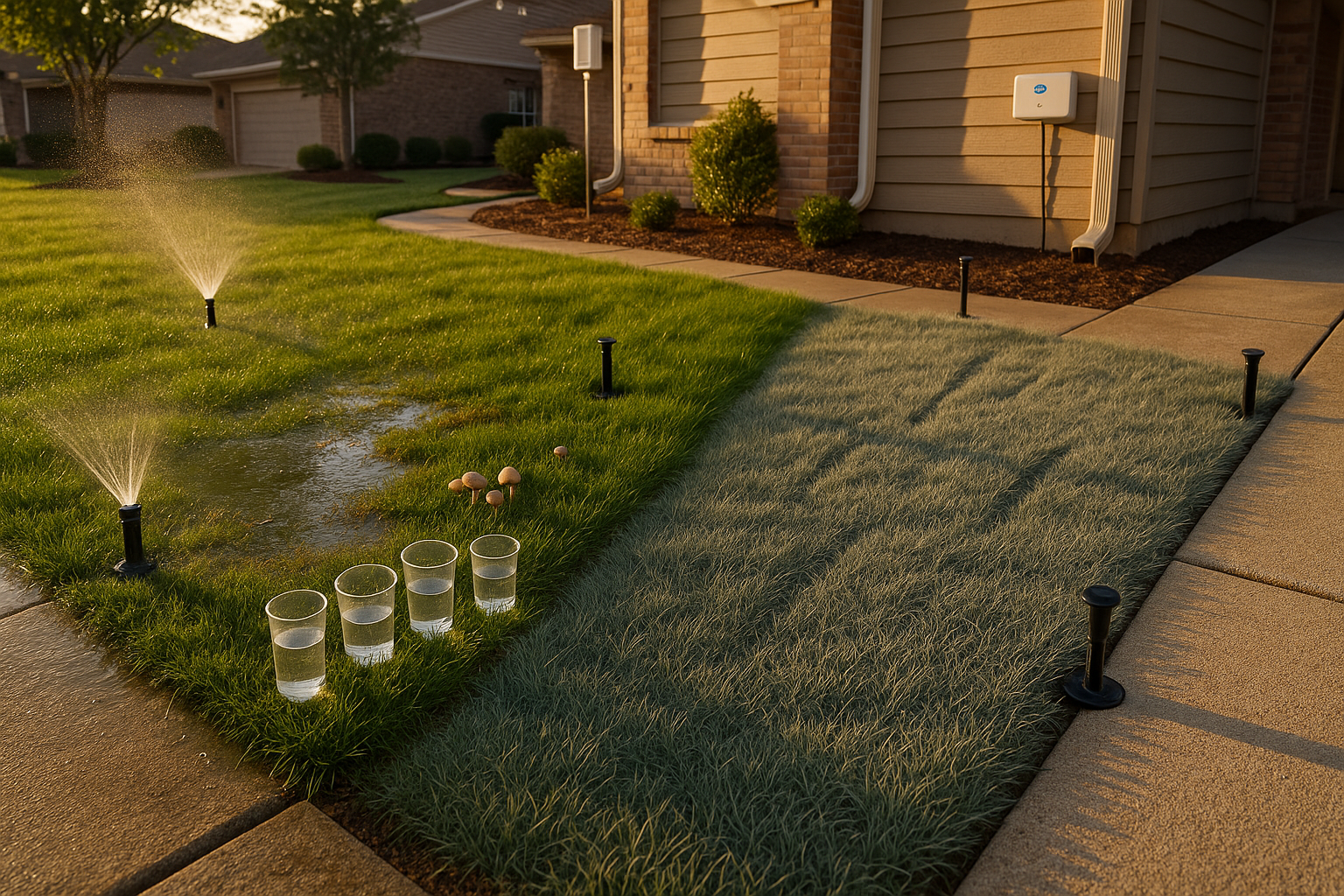
One of the biggest November mistakes? Forgetting to winterize your irrigation system. Here in central Indiana, night temps can drop below freezing by late October, and a hard freeze can split pipes and crack valve bodies. You need to blow out the lines, drain the backflow preventer, and shut down the controller. If you don’t have a big air compressor and the right fittings, this isn’t a DIY job—it’s worth hiring someone who does it every day. We’ve covered the step-by-step in another post on how to winterize your irrigation system in Indiana, but the short version is: get it done before Thanksgiving. Disconnect and drain your garden hoses and rain barrels too, and store them where they won’t freeze solid.
Gutters, Downspouts, and That Clay Soil Drainage Problem
Clean gutters aren’t a landscaping tip—they’re a foundation survival tip. When leaves pack your gutters, water overflows, runs down your foundation walls, and pools around the base. In Greenwood, where clay soil expands and contracts with moisture, that pooling can lead to basement leaks and frost heave. Get up there (or hire someone) and scoop out the gunk, then make sure downspouts extend at least 4 feet away from the house. While you’re at it, walk your property and check for low spots where water sits after a rain. On our sticky clay, even slight depressions become icy nightmares in winter. If you notice concrete walks or patios that have settled, leaving a spot for water to collect, a concrete contractor can lift or level those slabs before freeze-thaw cycles crack them worse. A small investment now beats a busted walkway in February. For broader drainage fixes like French drains or regrading, our article on Indiana clay soil problems goes deeper.
Tools, Safety, and Knowing When to Call a Pro
Fall cleanup can be a workout. But a few safety steps make it a lot smarter. Keep your mower blades sharp—dull blades tear grass and make it more prone to disease. Wear safety glasses and ear protection when running blowers and trimmers. If you’re dealing with dry, dusty leaf clouds, a dust mask helps. Most importantly, if you’re climbing a ladder to clean gutters or prune a limb, have someone spot you, and never overreach. A handyman can handle a lot of these small but risky tasks—gutter cleaning, leaf raking, even running a rented aerator—so you don’t end up sore or in the ER. And for anything high up or near power lines, call a pro. That goes for tree work too—if a limb is bigger than your arm, a tree service has the gear and training to drop it safely. There’s no shame in tagging in a team. In fact, many busy families in Greenwood and Brownsburg hire out the whole fall cleanup checklist because their weekends are already full. If that sounds like you, IndyGreen can build a custom plan—leaf removal, aeration/overseeding, bed cleanups, and irrigation winterization—all scheduled around central Indiana’s weird weather. Grab a free quote right here and we’ll make sure your yard isn’t the neighborhood cautionary tale. (Sorry, Dave.)
Need one crew for the whole property?
Next-day irrigation and single-source landscaping, hardscape, tree, and handyman service across greater Indianapolis. Free estimates.