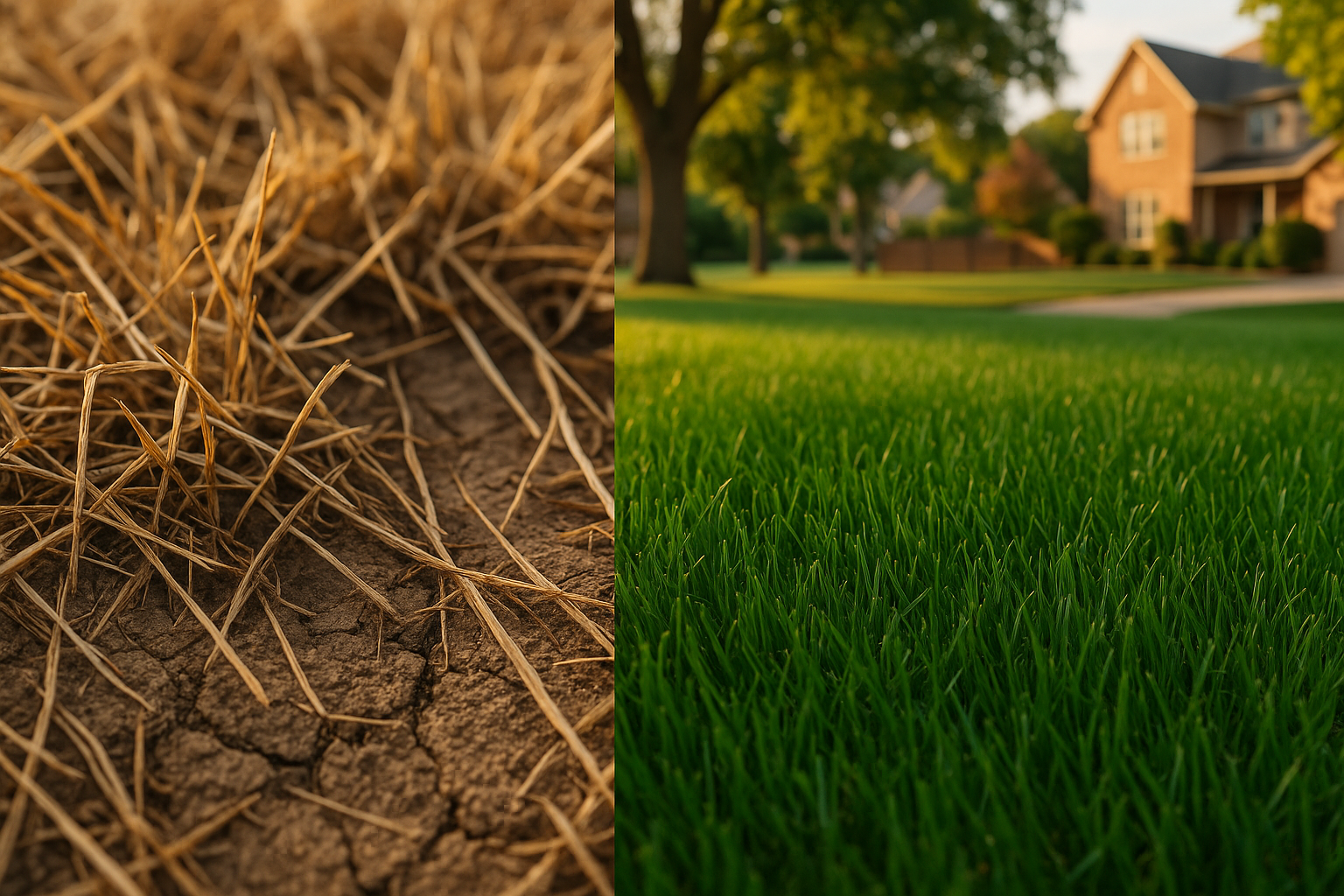
My neighbor Jim, a nice guy with a decent lawn, called me over last April, panicked. He’d just thrown down some cheap granular fertilizer on a warm Saturday, proud of himself for getting ahead of the greening. By Tuesday, his lawn looked like someone had taken a flamethrower to the edges, and the rest was a pale, sickly green. Plus, a week later, crabgrass started popping up everywhere. He’d missed the window and used the wrong stuff. I see this all the time in Fishers. Folks assume spring is the magic time because everything’s waking up, but for our cool-season grasses, that’s not the real story. The best time to fertilize lawn Indiana is actually anchored in the fall. Let me walk you through what I told Jim, and what I’ve learned from years of watching local turf struggle or thrive.
Why Fall Fertilizing Wins in Indiana
If you’ve got tall fescue, Kentucky bluegrass, or ryegrass—the typical mixes around Fishers, Carmel, and Noblesville—these grasses do their heavy lifting when soil temps are between 55 and 75 degrees. Spring gets all the publicity, but in our climate, a heavy spring feeding mostly pushes blade growth. That sounds good, until you realize you’re just creating a lot of mowing and stressing the plant before summer’s heat hits. Think of it like feeding your kids a huge meal right before a marathon—they’ll cramp up.
Fall, on the other hand, is when the roots are building reserves. When you put down the right fertilizer in early September and again in late October or November, you’re storing energy that keeps the lawn dense and resilient through winter, and it’s the first to green up next spring without a nasty growth surge. The consistent night temps in the 50s tell you it’s time. For Hoosiers, October and November are the months that really earn you that curb appeal your HOA expects.
The Fishers Lawn Fertilization Schedule
Here’s the simple three-step rhythm I use and recommend for Central Indiana lawns. It’s not a one-size-fits-all calendar because soil temperature matters more than dates, but this is the seasonal flow. For the full month-by-month breakdown of all lawn chores, you can peek at our Indianapolis lawn care calendar.
1. Early Spring: Pre-emergent & Light Feed (Late March – Mid April)
When the soil temperature hits 55°F and stays there for a few days—often around forsythia blooming—crabgrass seeds start to germinate. You want your pre-emergent down before that. Use a product with dithiopyr or prodiamine. I like to combine this with a light feeding, maybe 0.5 to 0.7 pounds of nitrogen per 1,000 square feet, using a slow-release fertilizer. That gently wakes up the lawn without sending it into a growth frenzy that burns out when the first 90-degree day hits.
Don’t forget: after you put down granules, water them in with about a quarter to half an inch within 24 hours. And if you have kids or pets, keep them off until the grass dries. This isn’t just being cautious; it’s about letting the fertilizer settle around the soil so it doesn’t stick to paws or little feet.
2. Early Fall: The Main Meal (September)
If you only do one fertilizer application all year, do it in early September. The grass is coming out of summer dormancy, hungry, and the weather is perfect for root growth. I aim for 0.75 to 1 pound of nitrogen per 1,000 square feet, with at least 30-50% of that nitrogen in a slow-release form. Products with polymer-coated urea or natural organics work well on our heavy clay soils without burning.
This is also the best window for overseeding tall fescue—the go-to grass for Fishers’ sun-and-shade mix. If you’re overseeding, skip the crabgrass pre-emergent unless it’s a seed-safe type, and hold off on heavy nitrogen until the new grass is well-established. A starter fertilizer low in phosphorus (because Indiana soils often already have enough) can help, but only if a soil test says you need it.
3. Late Fall: Winterizer (Late October – Mid November)
Just before the ground freezes, a winterizer application puts the turf to bed with a full belly. You’re looking for a blend higher in potassium and a moderate nitrogen component, again slow-release. This strengthens cell walls against cold and gives you an early green-up without the flushes that promote snow mold. In Fishers, I typically shoot for the first couple weeks of November, but if we’ve got a warm October, you can push into mid-November as long as the ground isn’t frozen solid.
If you’ve got an irrigation system, a light summer spoon-feeding every 4-6 weeks can keep color without overstressing. But that’s only for lawns with consistent water—otherwise, you’re risking burn and wasted product.
What If You Missed the Spring Window?
First thing Jim asked me: “So my lawn’s ruined for the year?” Not even close. Spring is nice to have, but fall is where the magic happens. If you didn’t get pre-emergent down and crabgrass has already sprouted, don’t just heap on nitrogen—you’ll only feed the weeds. Apply a post-emergent treatment if needed, and let the lawn coast on a light summer spoon-feed (if irrigated) until September. Then hit it with the early fall feeding. The lawn will bounce back, often looking better than the neighbor who did spring everything and nothing else.
How Sprinklers and Other Home Projects Play a Role
Fertilizing isn’t an island. It connects to how you water, how your hardscapes drain, and what’s happening with the other parts of your property.
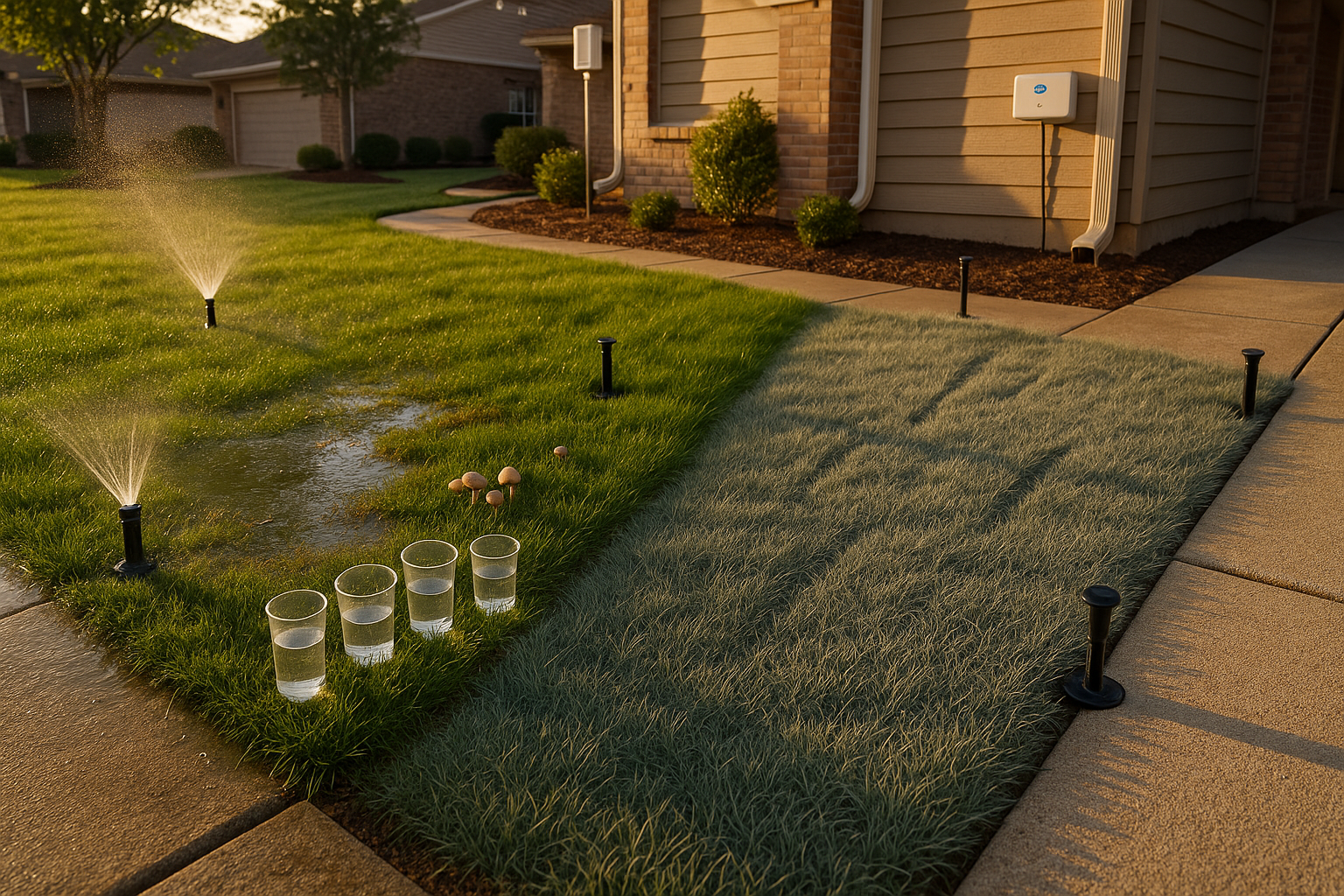
Irrigation – A properly set sprinkler system is a fertilizer’s best friend. You need to water-in granular products with about a quarter to a half inch within a day, and an automatic controller makes that effortless. Plus, fall feeding supports the root growth that a well-irrigated lawn needs to survive winter. If your system isn’t efficient, you might be washing nutrients downhill. (We wrote about what next-day irrigation really means if you’re curious.)
Concrete & Hardscapes – Always, always sweep fertilizer granules off your driveway, sidewalks, and patio. The heavy rains we get here—especially in spring and fall—can wash them into storm drains, and that runoff ends up in the White River or Geist Reservoir. Plus, sitting granules can stain concrete. If you’re considering a new patio or a concrete driveway vs. pavers, plan the install so it doesn’t disturb freshly fertilized turf, or you’ll be doing the work twice.
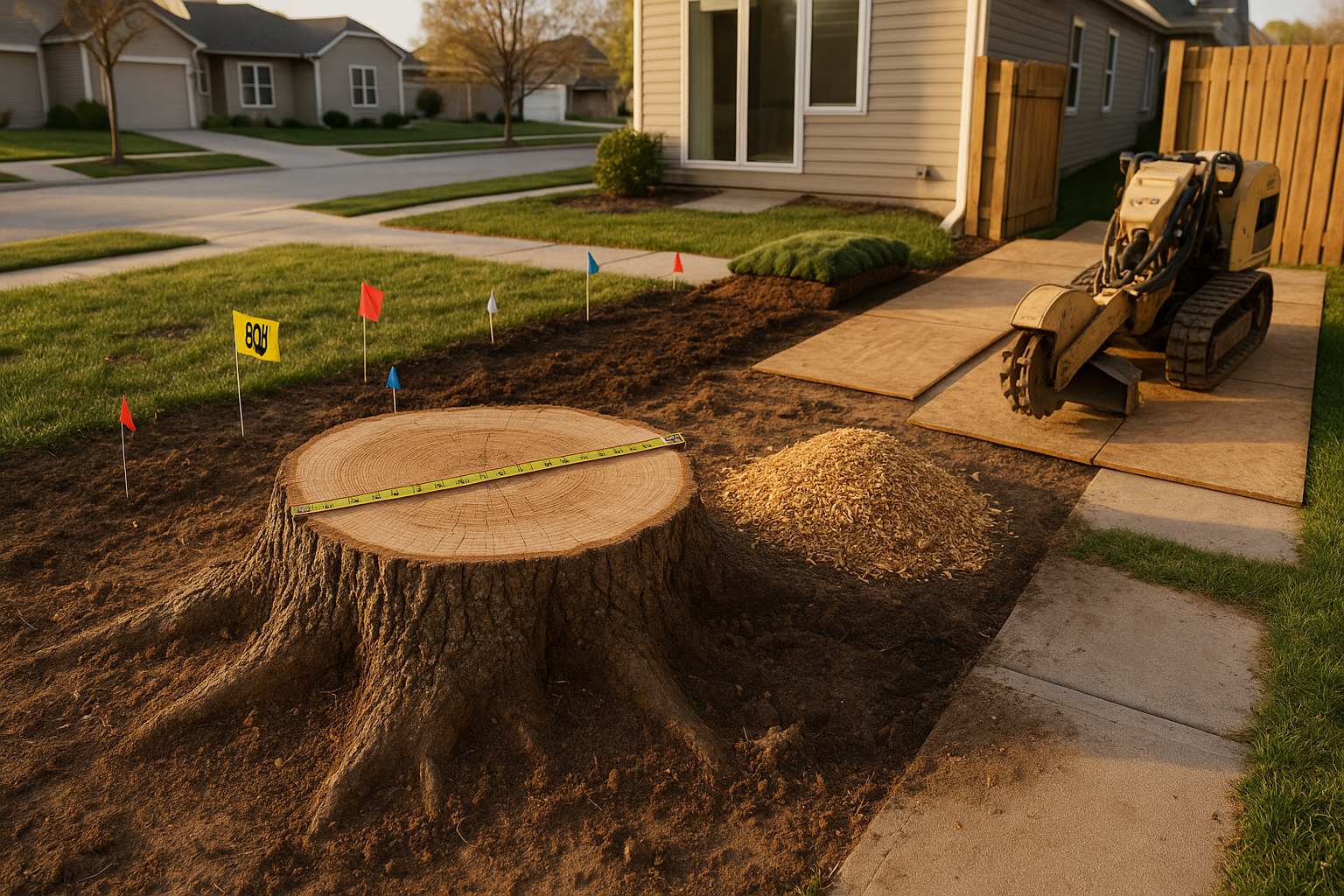
Trees – If your lawn has big shade trees, you’re fighting an uphill battle because grass wants sun. Tree roots also compete for water and nutrients. In some cases, thinning the canopy helps, but that’s a job for a professional. (Here’s a guide on signs a tree might need to come down—it can make a big difference for your lawn’s health.) The shade pattern changes how quickly the soil warms in spring, so your pre-emergent timing might shift a week later compared to a wide-open yard.
Landscaping & Handyman – When you’re putting in new flower beds or refreshing mulch, try to do it before a fertilizer pass, or let at least two weeks go by after feeding. The last thing you want is to cover fresh nutrients with mulch and stain the concrete edging. And in fall, keeping leaves off the lawn after you’ve fertilized is crucial; a thick layer of wet leaves can smother grass and trap moisture that invites disease. A handyman or regular maintenance plan can handle that leaf cleanup so you don’t have to.
Ready to Stop Guessing?
If you’re in Fishers, Indianapolis, or up through Hamilton County and you’re tired of the spring panic or the fall over-analysis, we can build a fertilization calendar that fits your actual lawn conditions—taking into account soil temperature, shade, irrigation, and what your HOA is probably expecting. No pressure, no jargon. Just a straight plan that works for our local clay and our climate. Get a custom quote, and let’s make next year’s lawn the one your neighbors stop to admire.
And hey, if you already pulled a Jim this season—fall is right around the corner. You’ve got this.
Need one crew for the whole property?
Next-day irrigation and single-source landscaping, hardscape, tree, and handyman service across greater Indianapolis. Free estimates.