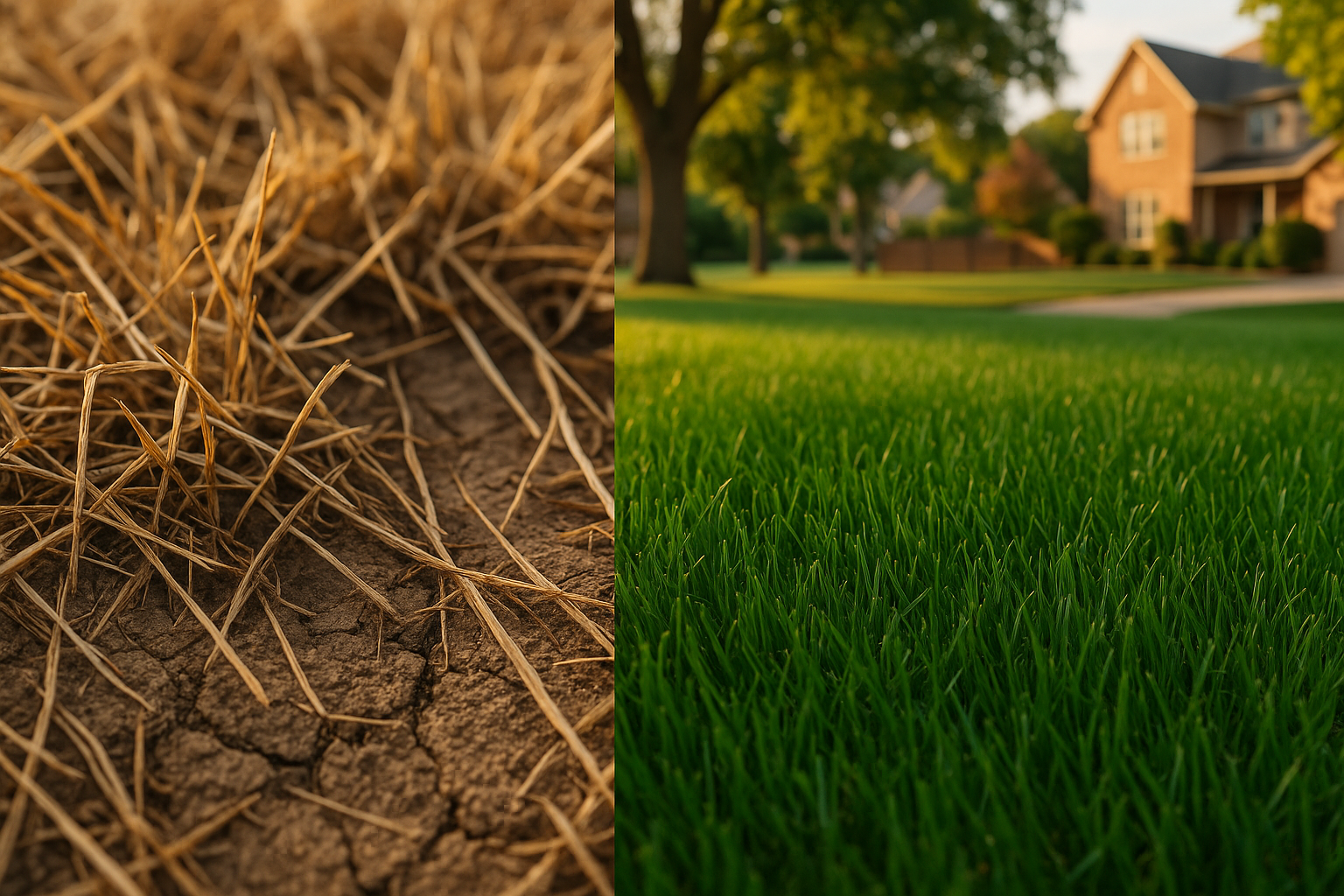
A couple years back, my neighbor in Avon — let’s call him Mike — called me in a panic. It was late July, his tall fescue looked like something you’d see on a post-apocalyptic movie set, all brown and crunchy. He had gone to the big box store, grabbed a bag that said “all purpose” and spread it on thick, thinking more food meant greener grass. Three days later, it was toast. Literally. That’s when he learned the first rule of following a lawn fertilization schedule for Indiana fescue: timing is everything, and summer nitrogen is a bad, bad idea.
Mike’s not alone. Tall fescue lawns around central Indiana — whether you’re in Avon, Plainfield, or Carmel — thrive on a specific rhythm. Tall fescue is a cool-season grass, which basically means it does most of its growing in spring and fall — read more about why that matters in our guide to Indiana grass types. A reliable lawn fertilization schedule for Indiana fescue is about putting the right food down at the right time. Get it right, and you’ll have that dense, dark-green carpet that makes the neighbors peek over the fence. Get it wrong, and you’re nursing a crispy mess and starting over in September. This month-by-month schedule is what I’ve seen work time and again on our heavy clay-loam soils. No complicated science-talk, just the steps that actually matter.
Spring: Don’t go crazy with nitrogen
Late March – Early April: Pre-emergent time
When the forsythia blooms or the soil temps hang around 55°F for a few days, crabgrass wakes up. That’s your cue to get a pre-emergent down. In Avon, this usually lands in the first half of April. Use a product with prodiamine or dithiopyr, and if you’ve had crabgrass sneak through before, plan a split application — half now, half six weeks later. Don’t skip this: a buddy in Fishers once ignored pre-emergent, come June his lawn was 40% crabgrass. He spent the whole summer regretting it.
Resist the urge to stack on nitrogen now. Fescue doesn’t need much spring food; too much pushes soft, watery growth that diseases love. If you’re already seeing strong green from last fall’s work, skip the N entirely. If color’s a bit pale, a light feeding — maybe 0.5 lb nitrogen per 1,000 sq ft — won’t hurt. But honestly, I usually tell folks in Greenwood and Zionsville to hold off and put that budget toward fall.
Late May – Early June: Spot treat weeds, optional light feed
By Memorial Day, dandelions and clover are shouting for attention. Spot-spray them with a broadleaf weed killer on a calm, 70-degree day. Hand-pull if you’ve got time and only a few — but don’t stress the timing. I treat when I see them, and I’ve never had a lawn revolt.
If you’re determined to feed in spring, now’s the window. Use a slow-release fertilizer (look for “methylated urea” or something with 30–50% slow-release) and keep it to 0.5–0.75 lb N per 1,000 sq ft. Water it in lightly. But remember, a spring feeding is optional for fescue; fall is where the magic happens.
Summer: Keep it cool, no food
June – July: Grub control, watering, and mowing high
Around mid-June, if your lawn has a history of grubs tearing up roots, apply a preventive grub control. Products with chlorantraniliprole go down a bit earlier (May–June), while imidacloprid-family stuff is best from mid-June to mid-July. Water it in well right after. No grub history? Skip it — we don’t treat for grubs every year in Noblesville or Westfield, only if you’ve seen damage.
Mowing height matters more than anything now. Keep that fescue at 3.5–4 inches. Tall blades shade the soil, cool the roots, and crowd out weeds. I set my mower deck as high as it goes in June and don’t touch it until October. And never take off more than a third of the blade — that stresses the grass like a bad sunburn.
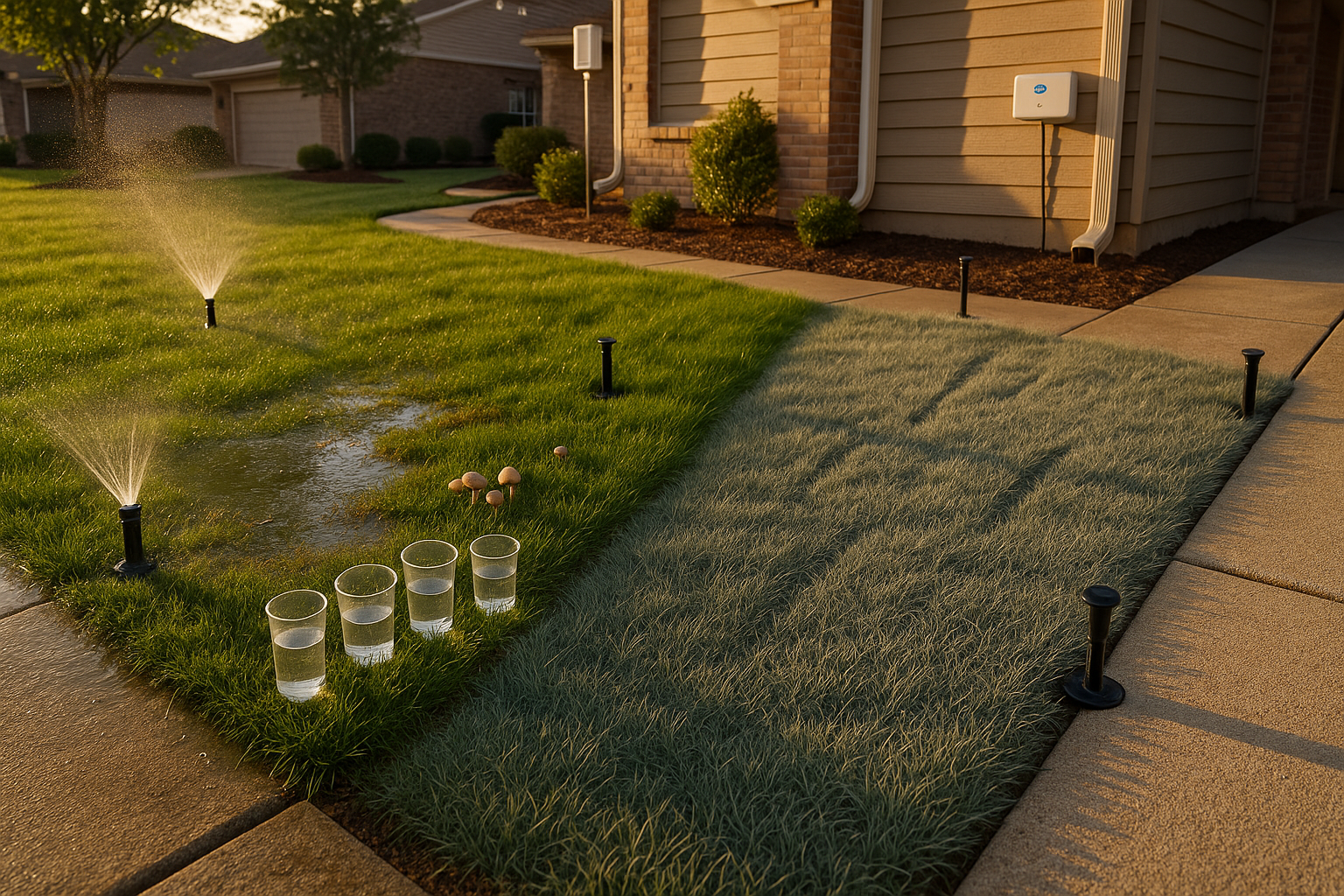
Watering is the other biggie. Fescue needs about 1–1.5 inches per week, from rain or irrigation. Water deeply, early in the morning, so the roots chase the moisture down. A shallow sprinkler run every day just grows shallow roots and fungus. If you don’t have an irrigation system, dragging hoses is a chore — but it’s worth it. And if your system’s acting up (broken heads, pressure issues), a handyman or an irrigation pro can fix it fast. No sense wasting water on the driveway.
August: Don’t touch the spreader
Seriously. Even if the lawn looks tired, feeding now can trigger a growth spurt just as the real heat hits. That’s a recipe for disease and dead patches. Keep mowing high, water when dry, and wait for the weather to break.
Fall: The main event
Early September: Core aeration + first heavy feeding
When the nights start cooling off — usually right after Labor Day in Avon — fescue wakes up. This is when you give it the year’s biggest meal. Apply 1.0 lb of nitrogen per 1,000 sq ft. I like a fertilizer with a good chunk of slow-release N so it feeds for weeks, not days.
If your soil’s compacted (and let’s be real, central Indiana clay is like brick by August), rent a core aerator or have a landscaper do it. Aeration before feeding means the fertilizer gets right into the root zone. Plus, the holes catch seed if you’re overseeding — which, by the way, is the perfect next step.
Late August – Mid September: Overseeding window
Want thicker fescue? Overseed now. After aeration is ideal. Use a quality tall fescue blend matched to our area. The trick: skip a normal pre-emergent because it’ll stop the seed from growing. Instead, use mesotrione (the active in Tenacity) at seeding if you must have weed control — it’s safe for new grass. Keep the seedbed moist, not soggy, with light waterings 2–3 times a day until the seedlings hit mowing height. Patience pays off here.
If you’ve got big trees throwing shade on the lawn, a tree service can thin the canopy so more light gets through — fescue needs at least some sun to thicken up. We’ve seen homeowners in Carmel and Zionsville with majestic oaks struggle with thin grass under the drip line; a little pruning made a world of difference.
Early – Mid October: Second fall feeding
About 4–6 weeks after the first fall app, hit the lawn again with another 1.0 lb N per 1,000 sq ft. This builds density and deepens the green as the days shorten. If you didn’t aerate yet, it’s still fine to feed — the roots are still active. Pair this with leaf cleanup. A thick layer of wet maples leaves will smother the grass and promote snow mold. I blow or rake every few days from mid-October through November, which is a pain but totally necessary out here in Brownsburg and Plainfield where the trees dump like crazy. Our fall cleanup checklist can help you stay on top of the mess.
Late October – Mid November: Winterizer
Once the top growth slows but the grass is still green, put down a winterizer — about 0.5–1.0 lb N per 1,000 sq ft. This doesn’t push tall blades; it stores energy in the roots so the lawn greens up faster in spring. I aim for around November 1st in Avon, but watch the weather. If we get an early hard freeze, go earlier. And for goodness’ sake, sweep any granules that land on the driveway or sidewalk back onto the turf. Fertilizer in the street washes right into storm drains — not good for anyone.
When DIY gets too lifey
Listen, putting together a full-season fertilization plan isn’t rocket science, but it does require paying attention to soil temps, spreader calibration, and knowing which products play nice together. If you’d rather spend your weekends with the kids or on the porch with a cold drink instead of pushing a spreader, IndyGreen can handle all of it — timing, materials, aeration, even fixing those pesky irrigation hiccups. We work on lawns from Avon to Lawrence to Fishers, so we’re familiar with the clay-loam battleground you’re dealing with.
And hey, if your lawn’s problems go deeper than grass — say, standing water after a rain or a side yard that’s too steep to mow safely — a concrete contractor might regrade a path or patio to fix the slope. Or a landscaper can reshape beds and add hardscaping that keeps water moving. We’ve even helped folks in Noblesville with French drain installs that transformed a soggy back forty into usable space. Point is, a great lawn often needs a little help from a few trades, and we can point you in the right direction.
Ready for a no-stress season? Hit up the quick quote form and we’ll build a custom plan that fits your fescue, your schedule, and your goals. No guesswork, no burned grass — just thick, green turf next fall.
Need one crew for the whole property?
Next-day irrigation and single-source landscaping, hardscape, tree, and handyman service across greater Indianapolis. Free estimates.