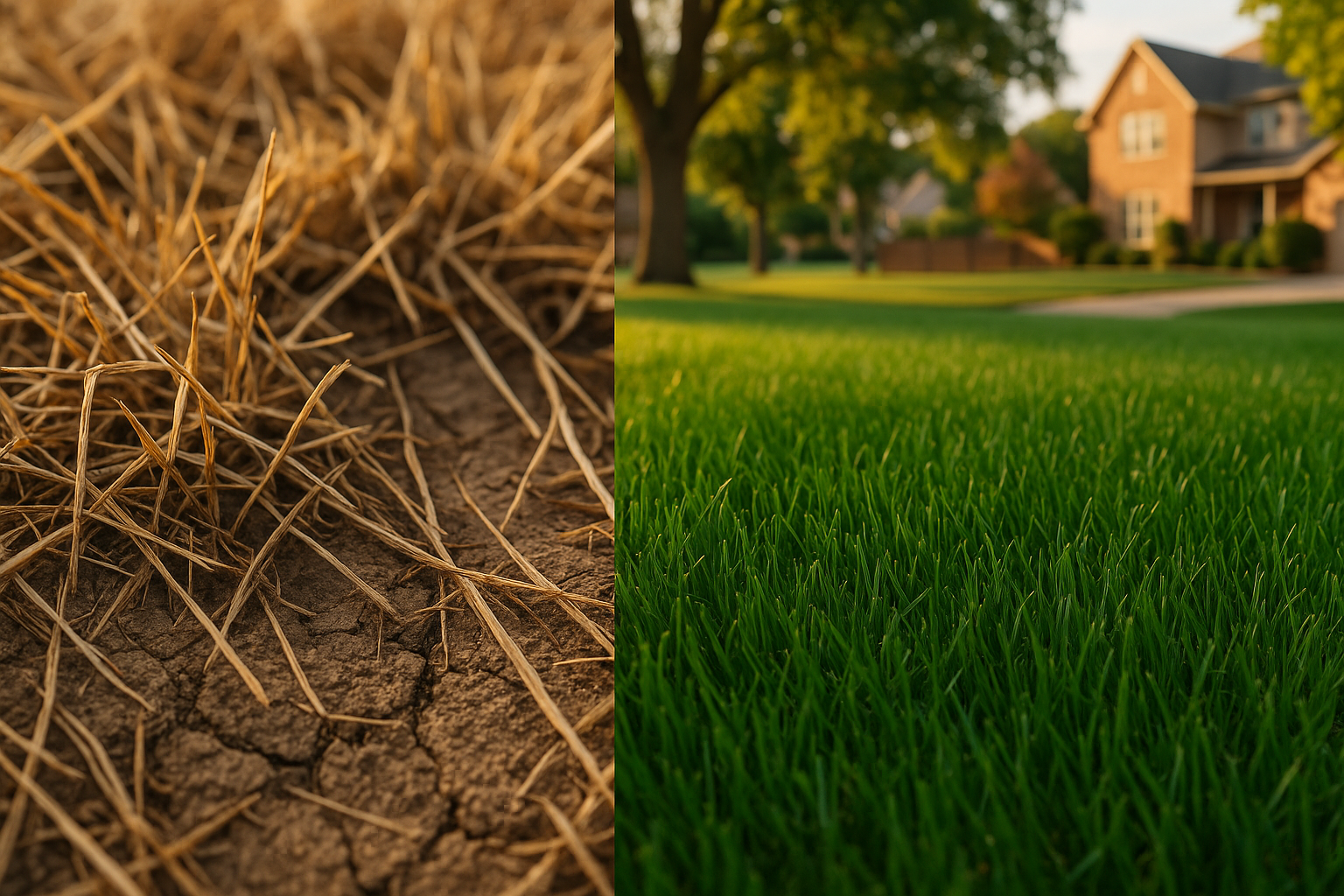
Last spring, my neighbor Dave was bragging in March about how he’d already thrown down some “weed and feed” and was firing up his sprinklers. By June, his yard looked like a patchy crabgrass farm with a side of mud. He’s a sharp guy, but he learned the hard way that a lawn schedule you pull off a national brand’s bag doesn’t work here. Not in Indianapolis, where the soil freezes, thaws, then bakes, and our cool-season grass wakes up on its own clock.
If you’re tired of guesswork and want a clear, local plan, you’re in the right spot. I’ve put together a spring lawn care schedule Indianapolis homeowners can actually follow—based on real timing, what I’ve seen working with yards around town from Broad Ripple to Noblesville, and tips from pros who deal with our heavy clay every day. No jargon, no hype. Just steps that make sense.
Why an Indy-Specific Schedule Matters (And No, It’s Not the Same as Ohio’s)
You might think any Midwest calendar will do, but Central Indiana has its quirks. Our last frost often sneaks into late April, sometimes later in shaded pockets of Zionsville or rural Hamilton County. That means you can’t safely crank up the irrigation system until then—more on that later. Our soil temperature for crabgrass germination—that magic 55°F—usually holds steady from late March to mid-April, not early March like some warmer regions. And the clay? Well, if you’ve ever dug a hole in Marion or Hendricks County, you know it’s like working pottery. That clay holds water, compacts easily, and dictates a lot of what we do (or don’t do) in spring.
Your Spring Lawn Care Schedule, Month by Month
Late February to Early March: Cleanup and Prep
When the snow melts and the ground isn’t soupy, get out and gently rake any matted patches—especially snow mold that looks like gray or pink cobwebs. Rake lightly; you’re just fluffing the grass, not tearing it out. Pick up sticks, leaves, and the random trash that blows in all winter. This is also the moment to edge your sidewalks, driveway, and landscape beds. If you’ve got a concrete patio or walkway, clearing back the turf gives your whole property a crisp look. (I’ve seen a basic lawn go from “meh” to “wow” just with a clean edge. If you’re not comfortable running the equipment, a landscaping crew can handle it in an hour.)
If you’re serious, now’s the time for a soil test. Drop a sample at your county extension office—it’s cheap and tells you exactly what nutrients you’re missing. Guesswork with fertilizer can mess up your lawn and your wallet. Once you’ve got results, you can plan your first feeding.
Late March to Mid-April: Pre-Emergent Is King
This window is critical. When soil temperatures hang around 55°F for a few days, crabgrass seeds wake up. In Indianapolis, that’s typically late March to mid-April. A pre-emergent like prodiamine or dithiopyr creates a barrier in the top soil layer that stops crabgrass before it starts. If you want to seed new grass at the same time, you’ll need a seeding-safe option (mesotrione works), but understand you’re trading some weed protection for new growth. I always tell people: if you can, save major seeding for fall. It’s just easier.
Now, if you missed that window—don’t panic. You can use a post-emergent crabgrass killer once it sprouts, but it’s trickier and less effective. Better to mark your calendar now.
Late April to Early May: First Fertilizer and Lawn Thickening
Once the grass is actively growing and you’ve mowed a couple times, it’s time for the first real feeding. Go with a slow-release nitrogen fertilizer at about 0.75 to 1 pound of actual nitrogen per 1,000 square feet. Avoid the temptation to dump high nitrogen in March—it encourages top growth before roots are ready, and you’ll mow yourself to death. I prefer a product with some iron too; it gives a nice green without the growth surge. If you’re not sure what to use, here’s a solid guide on fertilizing lawns in Indiana.
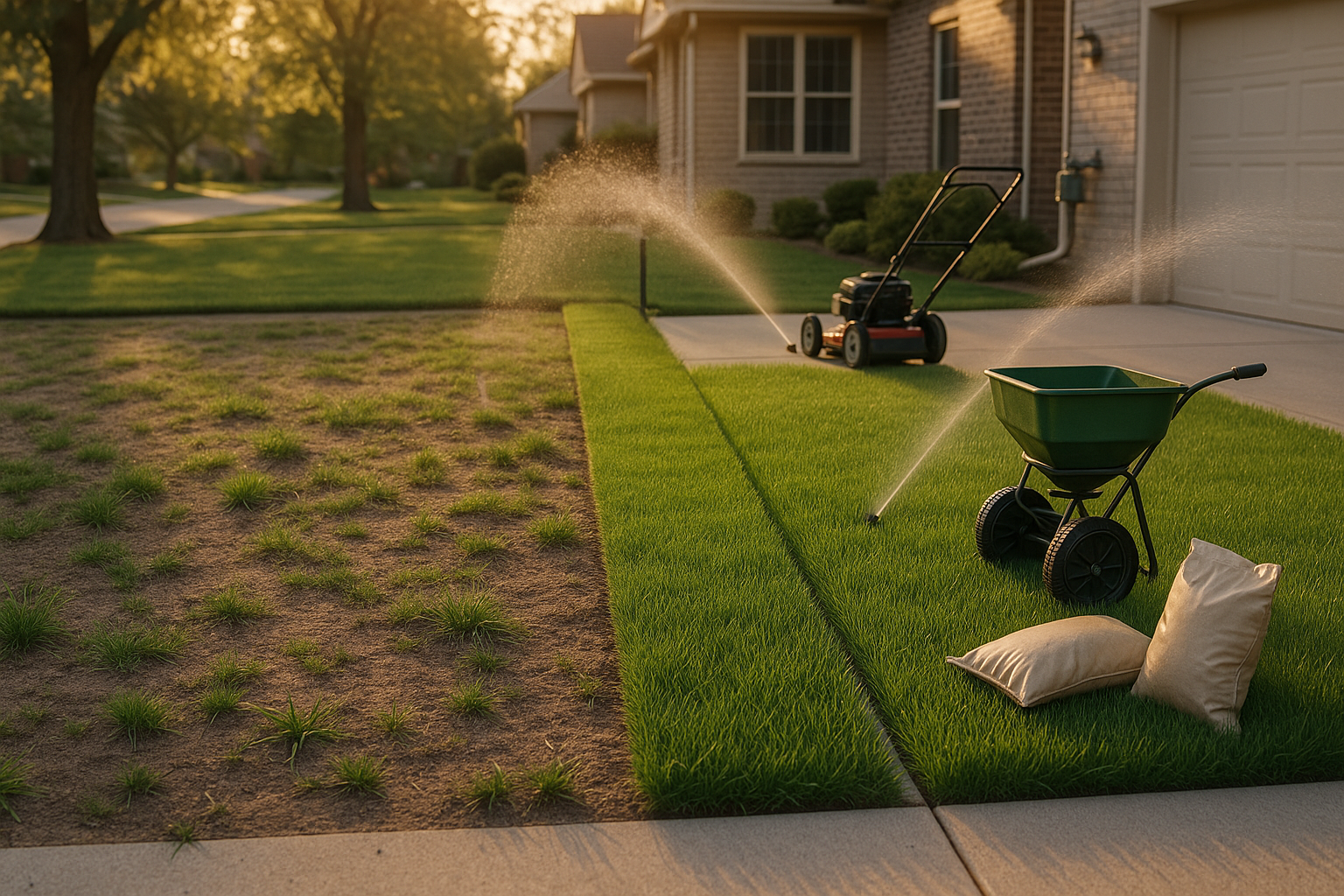
This is also when I’d consider light overseeding of thin spots—if you didn’t use a pre-emergent that blocks seed. Use a shade-tolerant blend in areas under trees. Speaking of trees: mature oaks and maples in neighborhoods like Meridian-Kessler or older Fishers subdivisions create deep shade. Thin turf there needs higher mowing height and maybe some branch pruning to let more light in. A tree service can safely limb up without wrecking your tree’s health. Don’t over-fertilize shaded spots; the grass isn’t as hungry.
May: Irrigation Startup, Mowing Steady, and Spot Weeds
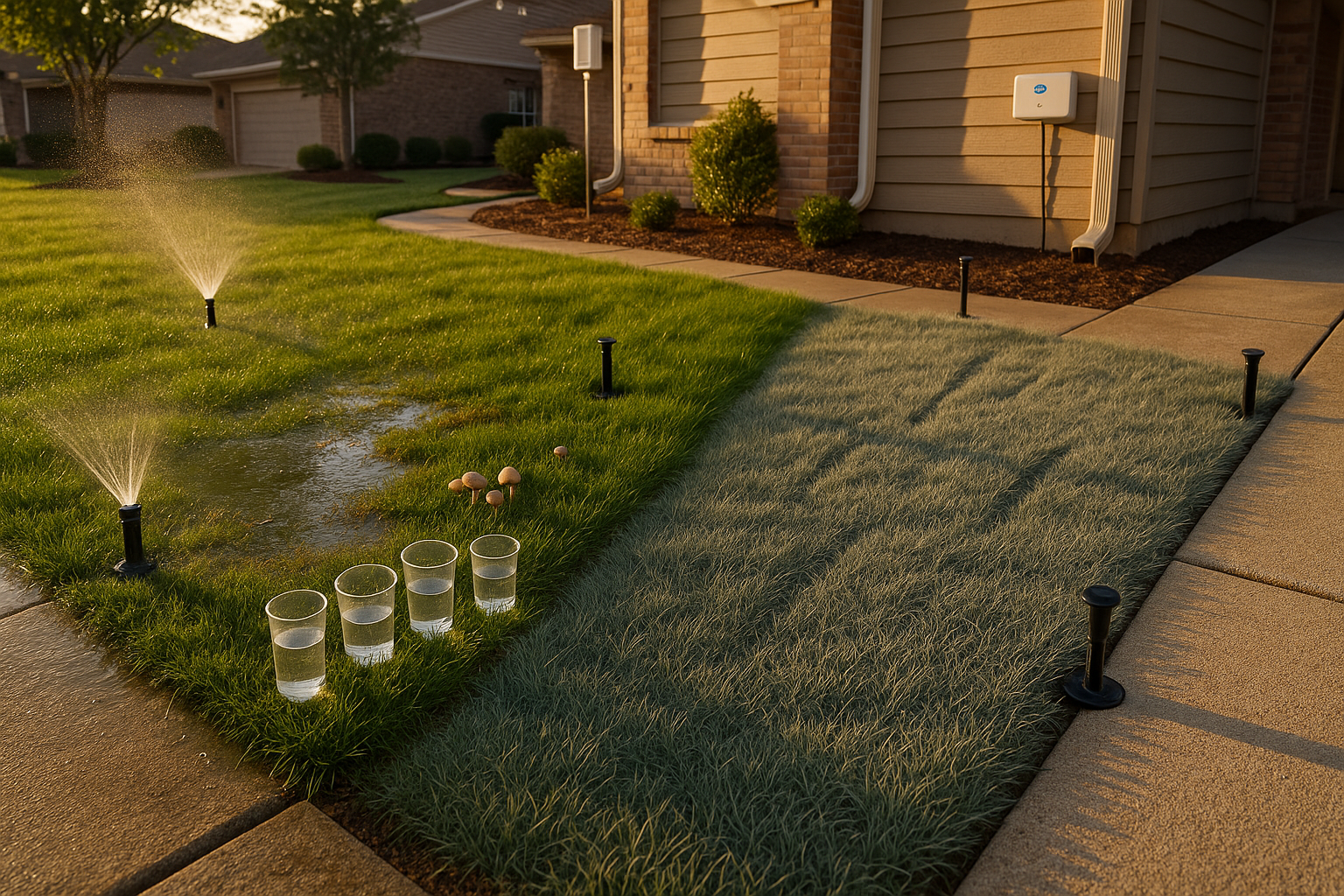
By now, frost risk is fading. Usually by early May, you can turn on your sprinkler system. But do it gently: open the main valve slowly to avoid water hammer, check every zone for leaks or clogged heads, and make sure your backflow preventer is working (local codes often require annual testing). I’ve watched a homeowner twist a valve too fast and blow a pipe fitting—water everywhere, and a frantic call to a handyman. So, take it slow or have it serviced.
Mowing height: keep it at 3 to 3.5 inches for our cool-season turf. It shades out weeds, encourages deep roots, and reduces stress. Sharpen your blades; dull ones rip the grass and invite disease. During rainy springs, you might mow more often, but never cut more than one-third of the blade at once.
If dandelions and clover start popping up, spot-treat with a broadleaf herbicide on a calm, dry day when temps are 50–85°F. Avoid spraying near newly seeded areas or when it’s windy. Sometimes I just dig out a few dandelions by hand—it’s satisfying.
Late May to June: Grub Prevention and Drainage Watch
If grubs have been an issue in your lawn, a preventive application in April or May with chlorantraniliprole can stop them before they hatch. This one is safe for pets and doesn’t harm bees, which is a plus. Neonicotinoids are also effective but timing shifts later. Talk to a pro if you’re not sure, because our grub pressure varies year to year.
This is also when heavy spring rains can reveal drainage problems. Clay soil doesn’t soak up water fast, and I’ve seen pockets in Fishers and Brownsburg where water pools for days. If you’ve got a soggy strip along the fence or a squishy spot near a downspout, consider long-term fixes. Sometimes simply redirecting gutter runoff or installing a French drain does wonders. We’ve tackled clay soil drainage solutions for lots of homes; it’s not a quick fix but makes a huge difference. For now, if water stands, just avoid walking on it.
When the Lawn Meets the Rest of Your Property
Your lawn doesn’t exist in a vacuum. Those landscape beds with fresh mulch? They need to stay tidy—no “mulch volcanoes” piled against tree trunks. Edging between turf and beds keeps everything sharp. If your concrete driveway or walkway has cracked over winter, spring is a good time to patch or replace sections before weeds move in. A landscaping or concrete crew can knock that out while you’re focused on the grass. And if you’ve got a long honey-do list with gutter cleaning, fence repair, or deck staining, a good handyman can pick off those tasks so your weekends aren’t consumed. And if you’re juggling multiple projects, hiring a single crew that handles lawn care, hardscapes, and handyman tasks saves you the headache of coordinating five different contractors.
I always think about a home in Carmel where the owner had a gorgeous lawn but let the brick paver patio get weedy and uneven. It dragged the whole look down. Tending to the hardscape edges and surrounding beds pulls everything together.
Common Spring Lawn Questions Quickfire
What if I missed the pre-emergent window? You can use a post-emergent crabgrass killer later, but it’s a salvage job. The best move is to get your pre-emergent down now even if you’re a week late; the soil warms gradually, and you’ll still catch some germination.
Should I aerate in spring? Light aeration can relieve compaction, but it breaks the pre-emergent barrier. If you aerate, do it before applying pre-emergent, or skip if you’ve already applied. Fall is really the best time for aeration here. If you have a thick thatch layer, a handyman with a dethatcher might help in spring, but be careful—it’s aggressive.
Can I overseed in spring and still control weeds? It’s a trade-off. A seeding-safe pre-emergent like mesotrione helps, but you’ll still have some weed pressure. Fall overseeding is far more successful because you can use stronger pre-emergents later.
When can I turn my sprinklers on? After the last frost, usually late April to early May in Indianapolis. If you see a forecast with nights in the 20s, wait. And check your backflow device—many municipalities here require an annual test.
Don’t Overthink It—Just Start
The perfect lawn isn’t about doing everything at once. It’s about timing things right for where you live. If you follow this spring lawn care schedule Indianapolis turf will thank you with thick, green grass that crowds out weeds and handles summer stress better.
If you’d rather spend your Saturdays doing something else, our team at IndyGreen can handle the whole spring plan—pre-emergent, fertilization, irrigation startup, and even that edging or concrete patching you’ve been putting off. We work all over the metro, from Greenwood to Westfield. Get a custom lawn assessment and find out what your lawn actually needs. It’s straightforward, honest, and we’ll treat your place like our own.
Need one crew for the whole property?
Next-day irrigation and single-source landscaping, hardscape, tree, and handyman service across greater Indianapolis. Free estimates.