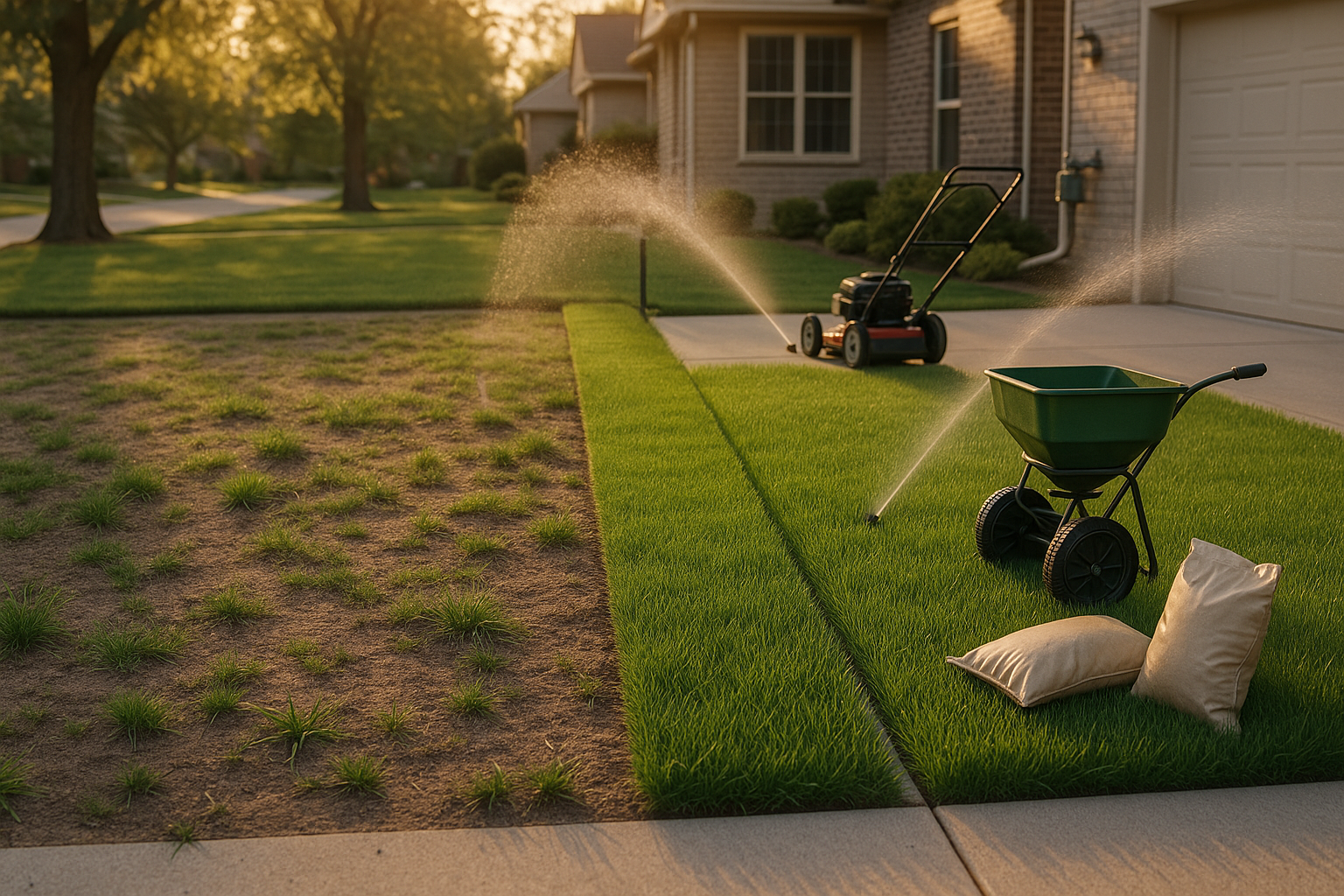
The other day I was talking to a guy in Zionsville, let’s call him Mike, who was just about ready to rip out his whole lawn. He had spent two summers fighting dry patches in his turf while the mulch beds next to the foundation turned into a swamp. Soaker hoses were his go-to, but they’d burst or clog, and the water bill still made him cringe. He said, “I just want to know—am I supposed to use sprinklers, drip, or what?”
That’s the exact moment most of our clients hit. They’ve been told drip is the water-saving savior and sprinklers are old news, or the opposite. Truth is, it’s not a boxing match. Drip and sprinklers do different jobs, and around here, with our sticky Indiana clay, the answer is usually a smart mix of both.
Sprinklers vs. Drip: What’s the Real Difference?
Sprinkler systems—the kind with pop-up heads in the lawn—spray water up and out over a big area. You’ve got rotary heads or spray heads. The newer rotary nozzles put out bigger droplets in a slow, even pattern, which cuts way down on drift and waste compared to those old misty sprayers.
Drip irrigation is the quiet cousin. It uses thin poly tubes laid right at the base of plants, with little emitters that release water at a crawl—think half a gallon per hour. The water seeps down into the soil without ever spraying into the air or onto the sidewalk. You barely see it because it’s tucked under mulch, and that’s a big plus if you’ve got a concrete contractor who just put in a fresh patio and you don’t want orange hard-water stains.
Why Indiana Clay Soil Changes Everything
Here’s the thing you can’t ignore in Zionsville: our dirt is heavy clay. It drinks water about as fast as a brick soaks up coffee. If you blast it with a sprinkler running 20 minutes, most of that water slides off or pools up before the roots see it. That’s where the cycle-and-soak method comes in. You run a zone for 5 minutes, let it rest, then hit it again. Drip is naturally slow, so it’s a perfect dance partner for clay—and with pressure-compensating emitters, you won’t get the first plant in the row hogging all the water. We’ve pulled up soil samples in neighborhoods like Stonegate and it’s amazing how much happier foundation plantings look when they get a long, gentle drink instead of a daily splash.
Speaking of clay, if you’re also dealing with drainage problems in the yard, you might want to check out how clay soil messes with drainage.
Where Drip Shines (and Where It Doesn’t)
Drip for Beds, Trees, and Narrow Spaces
Drip is the king of garden beds, foundation plantings, and those weird little side-yard strips where a mower barely fits. I’ve seen guys from our crew retrofit an old sprinkler zone into drip in under a day—they cap the heads, run a drip line off the existing pipe, and suddenly the homeowner stops nagging their landscaper about dead azaleas. Drip also won’t spit water on your siding, which means your handyman doesn’t have to come fix rotted trim every other year. And if you’ve got expensive trees—like a mature maple or a row of arborvitaes—a tree service friend told me he’d rather see a drip ring around the root ball than a sprinkler that encourages shallow roots. Drip gets the water 12–18 inches deep where it counts.
But here’s the fear everyone whispers: “Won’t it clog?” Yeah, if you skip a filter. Put a decent 150-mesh filter at the valve and flush the lines once in spring, and you’ll be fine. We’ve pulled out ten-year-old drip tubing that was still working like new. The other worry is critters—squirrels or rabbits chewing on exposed lines. The fix is simple: bury the tube under an inch of mulch. They’ll leave it alone.
Drip for the Lawn? Not Really.
Every so often someone asks, “Can I use subsurface drip for my whole lawn?” In theory, sure. In real life, for a Zionsville yard with kids and dogs and maybe a bit of hollow-tine aeration, it’s a maintenance nightmare. Turf roots are shallow and tangled; getting even coverage with buried drip is a guessing game. And if you ever need to patch or reseed, you’re liable to slice a line with a shovel. Sprinklers are still the smarter play for open grass.
Designing a Hybrid System for Zionsville Yards
Most properties we see? They end up with a hybrid. Rotary sprinkler heads for the lawn—set to match precipitation rates so you don’t drown one side while the other bakes—and drip zones for everything else: beds, slope plantings, the hedgerow along the privacy fence. Zoning is huge. You don’t want a sunny turf zone running the same schedule as a shady bed. Smart controllers make this dead simple. They pull local weather data and adjust run times if it rained or is supposed to rain. No more guessing. If you’re worried smart controllers are complicated, I promise it’s like setting a DVR. You push a few buttons, it does the rest.
And if you’re retrofitting an older system, start small. We’ll often convert just the front beds to drip first. It’s cleaner, saves water, and the plants perk up in a week. You can even tie it into a spring lawn care schedule so the whole landscape clicks.
What Does It Cost and Is It Worth It?
Cost depends on things like how many zones you need, whether we’re trenching through established lawn, and the backflow preventer your township requires. (Indiana code says every irrigation system needs a backflow, and some cities like Carmel make you test it annually.) A new full system on a quarter-acre lot might run $3,500–$6,000, but that’s a ballpark—not a quote. Retrofits are cheaper because you reuse some pipe. We wrote a whole post on sprinkler installation costs around Indianapolis if you want to geek out on numbers.
Will it save on water bills? Usually, yes—especially on tiered rates like Citizens Energy has. Drip can use 30–50% less water than old spray heads, and rotary nozzles cut waste by 20% over traditional sprays. Put that together with a WaterSense-certified controller, and you might see the bill drop $15–25 a month in peak summer. Over five years, that pays you back.
Winter Worries and Long-Term Care
Indiana freezes. Hard. If you don’t winterize—I mean blow out every zone with a compressor, shut off the backflow, drain the manifold—you’re buying new valves or worse come April. We get a rush of calls every March from homeowners who “meant to” but didn’t. Drip lines are actually more freeze-resistant because they self-drain if laid on grade, but you still have to purge the mainline and backflow. We have a detailed guide on how to winterize your irrigation system in Indiana that walks you through it.
Maintenance isn’t crazy. Sprinklers: each spring we do a head check, clean nozzles, adjust for overgrowth. Drip: clean the filter, flush the lines, replace any chewed emitters. That’s about it. If you’re the type who’d rather not crawl around, a handyman can handle filter cleanings, but for the blowout, call a pro who has the right-sized compressor.
The IndyGreen Way
We don’t just show up with a shovel and guess. When you call us, we come out, do a pressure and flow test, map your sun and shade, and draw up a zone plan that makes sense for your dirt and your plants. We talk about what you actually use your yard for—parties, kids, tomato patches—and design around that. No hard sell, no fuzzy math. Just a straight-up plan and an itemized quote.
If you’re in Zionsville, Carmel, Westfield, or anywhere around Marion County, and you’re tired of dragging hoses or staring at a sprinkler that waters your driveway more than your grass, grab a spot on our calendar for a site visit. We’ll walk your property together and figure out the right mix of drip and sprinklers—so you can stop worrying and actually enjoy the yard you pay for.
Need one crew for the whole property?
Next-day irrigation and single-source landscaping, hardscape, tree, and handyman service across greater Indianapolis. Free estimates.