I remember the summer my neighbor Dave spent every Saturday morning shuffling hoses around his yard in Fishers. He’d drag a sprinkler from the front lawn to the back, then to the side strip, all while keeping an eye on the sky. By August, patches of his grass were crispy, and he was frustrated. He’d call me over, point at his brown spots, and say, "This can’t be how it’s supposed to work." Dave’s problem wasn’t his lawn—it was his method. He needed a system that did the work for him. That’s when he started looking into sprinkler system installation cost in Indianapolis.
If you’re like Dave, you want a straight answer on what a system costs in Central Indiana. So let’s cut through the guesswork.
What’s the Typical Cost to Install a Sprinkler System in Indianapolis?
On average, homeowners in the Indianapolis metro spend between $2,500 and $6,500 for a professionally installed residential system. Most common setups—4 to 8 zones—land in the $3,500–$5,000 range. Of course, that number moves up or down depending on your property size, the number of zones, and the level of detail you want.
Here are a few real-world scenarios based on typical Indy lots:
- Small city lot (4–5 zones): $2,500–$3,500. Think a 0.15-acre yard in Irvington or near Broad Ripple with simple layout, no crazy slopes.
- Standard suburban lot (6–8 zones): $3,500–$5,500. This covers most homes in Carmel, Fishers, or Zionsville—about a quarter-acre with front, back, and side yards.
- Large or complex property (9–12+ zones): $5,500–$8,000+. Maybe you’ve got a half-acre in Westfield with a steep bank, lots of planting beds, or tricky corners. That’s where cost climbs.
But a flat number doesn’t tell the whole story. What drives that cost?
Key Factors That Drive Sprinkler System Installation Cost in Indianapolis
Water Pressure and Flow
Before anyone digs, a good installer tests your water pressure and flow rate. In many Indy neighborhoods—especially older parts of Lawrence or Irvington—city water pressure can be lower than expected. That affects how many heads you can run per zone and whether you need a booster pump. If you’re on a well in Zionsville or Cicero, the system has to be designed differently. That test is usually included in a quality estimate, but it’s a non-negotiable first step.
Zone Count and Head Types
More zones mean more valves, more pipe, and more labor. Each zone handles a set of sprinkler heads. The type of head matters too. Standard spray heads are the cheapest option, but they waste water on slopes and narrow strips. MP rotators cost a bit more but use less water and cover larger areas evenly—great for our clay soil in Brownsburg. Drip irrigation in flower beds adds cost but saves water and keeps shrubs happy.
Pipe Material: Poly vs. PVC
In Central Indiana, most pros use poly pipe (polyethylene) because it handles freeze-thaw cycles better than PVC. PVC is rigid and can crack if not buried deep enough. Poly bends slightly and is less likely to split. That’s especially important with our late-October freeze. Most installers around here, including IndyGreen, go with poly for the main lines.
Installation Method: Trenching vs. Vibratory Plow
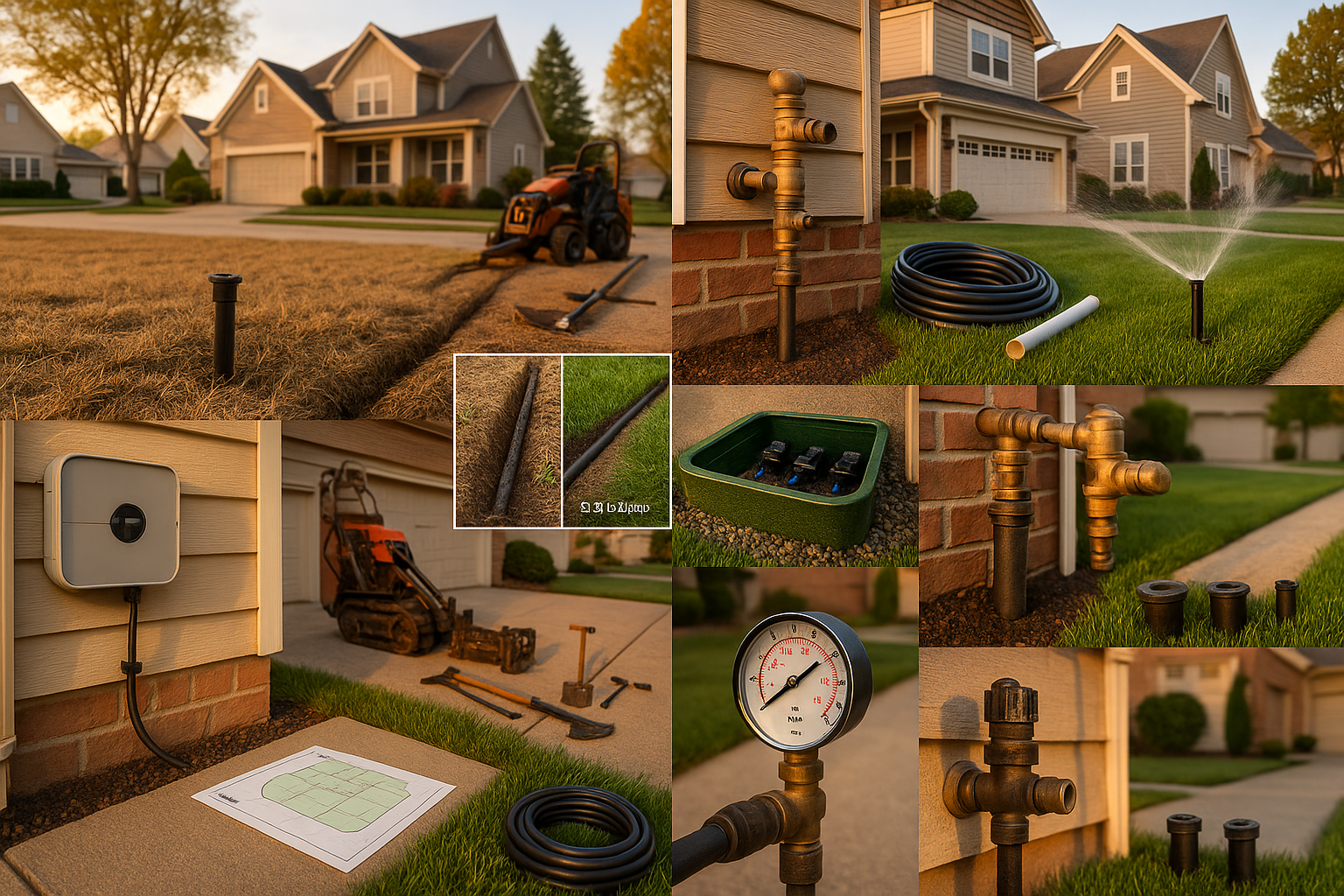
This is where your lawn’s recovery time is affected. Traditional trenching digs a 6- to 8-inch-wide ditch. A vibratory plow slices a narrow cut, maybe 2 inches wide, and lays the pipe without digging a trench. It leaves a barely visible seam that heals in days. The vibratory plow method costs a little more but is way easier on your lawn. If you’ve got a pristine yard in Fishers or Noblesville, this is worth the upgrade.
Backflow Preventer, Permits, and Testing
Indianapolis requires a backflow preventer on any irrigation system connected to the city water supply. That’s code—no exceptions. A proper assembly costs $150–$350 installed. Plus, new systems need a permit in Marion County and many surrounding towns. Permit fees run $50–$150. Then there’s annual backflow testing, which is required by law. A certified tester (often the same company that installed it) charges $40–$80 per year.
Controller: Basic vs. Smart
A basic manual timer is cheap, maybe $50. But if you want a Wi‑Fi, weather-based controller—like a Rachio or Rain Bird—it’s $150–$300. The smart ones pay for themselves over time. They adjust watering based on local weather, so you’re not watering during a thunderstorm. In our swingy Indianapolis summers, that can cut your water bill by 20% or more.
Labor, Restoration, and Site Complexity
Labor is the biggest chunk of your estimate. A typical residential install takes one to three days. Crews lay pipe, wire valves, mount controllers, and test every head. Afterward, they rake and roll the trenches. If they used a vibratory plow, the seams settle fast. If they trenched, you might see a slight dip for a week or two. Most companies reseed or sod where needed. Restoration is usually included—but ask.
Local Rules and Seasonal Must-Dos
Indianapolis has its own quirks. Citizens Energy Group oversees cross-connection control, so your backflow assembly has to be an approved model and tested yearly. Hamilton County (where Fishers and Noblesville sit) also enforces backflow rules. Don’t skip this—it’s a hassle, but the fines aren’t worth it.
Winter is real here. We get freezes deep enough to crack pipes. Every fall, you need a professional winterization: compressed air blowout to empty the lines. That’s about $60–$100 per year. Spring startup (adjusting schedules, checking for freeze damage) is similar. Factor that into your ownership budget.
How to Compare Irrigation Bids Like a Pro
Getting three quotes is smart, but comparing them can feel like translating a foreign language. Here’s what to look for:
- Zone map – Does the proposal show a drawing of your lawn with head placement?
- Head and valve specs – Are they listing brands and models? MP rotators vs sprays? Pressure regulation?
- Pipe type – Poly or PVC? And depth? (In Central Indiana, lines should be at least 6 inches deep, but deeper near driveways.)
- Controller model – Basic or smart? Include a rain sensor?
- Backflow model – Is it approved for your locality?
- Restoration – What’s done same-day? What happens if the lawn settles badly?
- Permits and testing – Who pulls the permit? Is backflow testing included first year?
- Warranty – Parts and labor? How long?
- Timeline – How many days? When can they schedule?
If one quote is way cheaper, ask why. Maybe it uses spray heads in a yard that should have rotors, or skips permits. A lower price can cost you more later.
What IndyGreen Does Differently
We start with a site visit. No guessing. We test your pressure and flow, measure every corner, and design zone by zone. We use a vibratory plow where possible to keep your lawn intact. Our valve boxes are set flush with the ground on a gravel base—no settling after rain. Wire splices get waterproofed, and the controller is mounted neatly and labeled. If we’re running drip in your beds, we bury it under mulch and secure it with stakes.
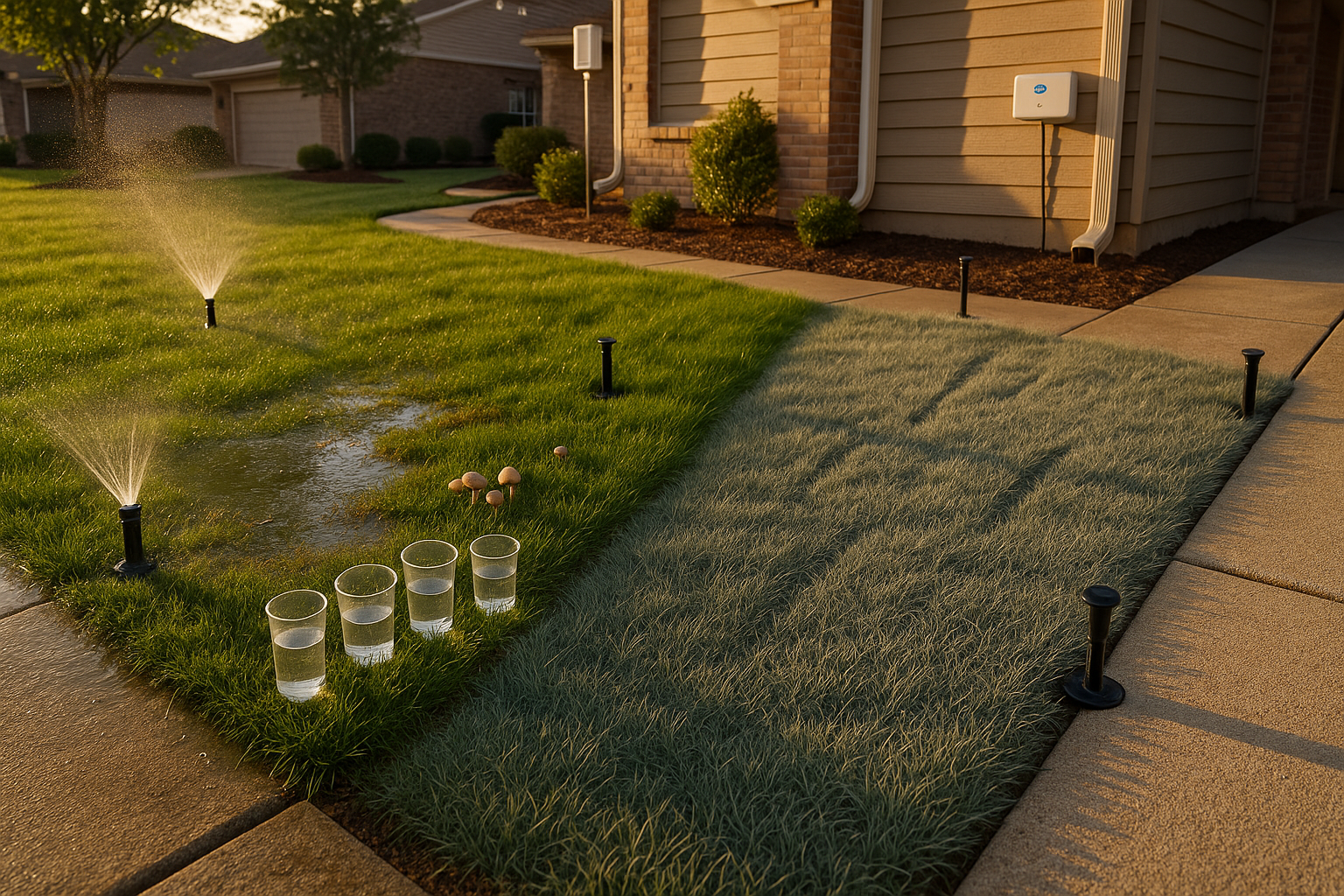
We also do a full coverage audit. We run the system, adjust heads so they overlap properly, and check that your driveway stays dry. We hand you a zone map and a labeled panel. No mystery.
And we handle all the paperwork: permits, backflow registration, scheduling the inspection. You don’t have to call anyone else.
What About On-Going Costs?
Owning a system isn’t just the install. Budget for:
- Fall winterization: $60–$100/year
- Spring startup: $60–$100/year
- Backflow testing: $40–$80/year
- Occasional repairs: a broken head or leaky valve might cost $50–$200 when they happen.
A well-designed system with quality parts (and proper winterization) will rarely surprise you. The biggest risk is freezing—but if you blow out the lines every fall, you’re fine.
Will a System Really Increase My Water Bill?
Yes and no. An efficient system with a smart controller uses less water than dragging hoses around. Most homeowners see their summer bill go up $30–$80 per month during peak watering season. But the lawn looks better, and you save hours every week. Dave now spends Saturday mornings on his porch with coffee, not wrestling hoses.
Ready for a No-Surprise Quote?
If you’re in Indianapolis, Carmel, Fishers, Greenwood, Noblesville, Westfield, Zionsville, Brownsburg, Avon, Plainfield, or anywhere in between, we can give you a fixed-scope proposal. No hidden fees, no guesswork.
Schedule your on-site pressure and flow test here →
You’ll get a clear breakdown, a zone map, and a team that treats your lawn like its own. Because installing a sprinkler system should be exciting—not frustrating.
Related reads: What “Next-Day Irrigation” Really Means in Indianapolis and The Indianapolis Lawn Care Calendar Month-by-Month.
Need one crew for the whole property?
Next-day irrigation and single-source landscaping, hardscape, tree, and handyman service across greater Indianapolis. Free estimates.