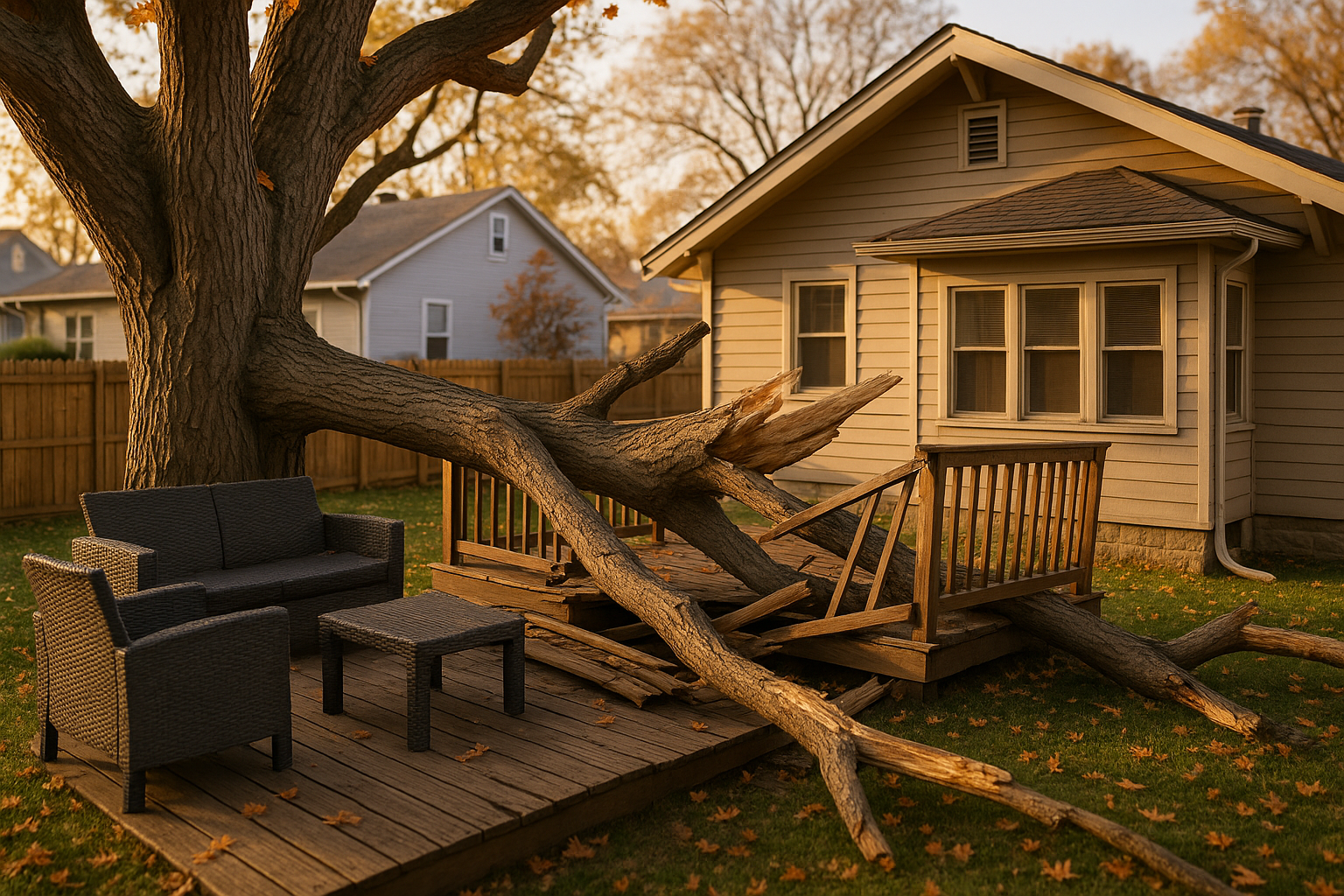
Last spring, a neighbor of mine in Meridian-Kessler called me after a storm. A big silver maple in his backyard had dropped a massive limb onto his deck, narrowly missing his patio furniture. The tree looked fine from the street—full canopy, no obvious rot. But up close, you could see a dark crack running down the trunk where two big branches met. He'd ignored it for years. That limb cost him a weekend of cleanup and a new deck railing.
That's the thing about trees in Central Indiana. They can look healthy and suddenly fail. Knowing when to remove a tree Indianapolis homeowners face this question every spring and fall. Let's walk through the signs that mean it's time to act—before a storm makes the decision for you.
Clear Signs a Tree Should Be Removed
Some problems are obvious. Others take a closer look. Here's what to watch for.
50% or More Dead Canopy
If more than half the branches are bare or have no leaves during summer, that tree is in serious decline. It won't recover. Dead wood falls, and a weakened tree is a hazard. I've seen this in ash trees hit by emerald ash borer (more on that in a moment).
Trunk Cracks, Cavities, and Fungus
A crack that goes deep into the trunk, a hollow spot you can poke your finger into, or a mushroom-like conk growing at the base—those are red flags. Decay has eaten away the structural wood. That tree is weaker than it looks.
Leaning or Soil Heave
A tree that suddenly leans, especially with soil lifted up on the opposite side of the root ball, is telling you the roots have let go. Even a slow lean over time can become dangerous. In our heavy clay soils around Carmel and Fishers, root systems are often shallow. A lean with soil heave means the tree is close to falling.
Deadwood and Falling Branches
If you're constantly picking up dead sticks after every wind gust, that tree is shedding itself. Repeated large limb failures mean the tree is failing from the inside. Don't wait for the next one to hit your car or your kid's playset.
Roots Damaging Hardscape
Sidewalk lifting, driveway cracking, roots growing into your foundation—these are common in older neighborhoods like Broad Ripple and Irvington. Sometimes you can remove the offending root, but often the tree becomes structurally unstable. A tree risk assessment Indianapolis professional can tell you if the tree can stay or needs to go.
Local Species and Their Risks
Not all trees are created equal. Here's what gives Indy homeowners the most trouble.
Ash Trees and Emerald Ash Borer
EAB is everywhere in Central Indiana. An untreated ash tree will die within a few years of infestation. The wood becomes brittle, and limbs start falling. If your ash has more than 30% dieback, treatment likely won't work. It's time for ash tree removal Indianapolis. I've seen too many homeowners try to save a tree that's beyond help—don't be one of them.
Bradford Pear and Silver Maple
Bradford pears are notorious for splitting in half during wind or ice storms. Their branch angles are weak, and they grow fast but fall apart fast. Silver maples have the same problem—they love water, but their wood is soft and they develop codominant stems with included bark that's basically a hidden failure point. In Zionsville and Westfield, these trees are everywhere. If you have a big silver maple with a split crotch, get it checked.
Blue Spruce and Oak Wilt
Blue spruce in Indy are declining from needle cast and other diseases. They turn brown from the bottom up and become eyesores. Oak wilt is a threat to red oaks; if you see leaves browning in summer starting at the top, call a pro. There's no cure once a tree is infected, and removal may be needed to protect nearby oaks.
When Removal Beats Trimming
A lot of homeowners ask, "Can't we just prune it?" Sometimes yes. But if the tree has advanced decay, major cracks, or root failure, pruning won't fix the structural problem. It's like putting a bandage on a broken leg. Once the load-bearing wood is compromised, the tree is a liability.
Cabling and bracing can help some trees, but they're not magic. They buy time, not safety. If the tree poses a risk to your house, driveway, or the sidewalk, removal is the responsible choice. In Greenwood and Noblesville, I've seen cabling fail on old trees during straight-line winds—the tree still came down.
Timing and Permits in Indianapolis
When to Remove
Hazardous trees should be addressed immediately. But if you have time, winter is a great window. The ground is frozen (when we're lucky), so heavy equipment does less damage to your lawn. Trees are dormant, which makes cleanup easier. Spring is risky because saturated soils make marginal trees more likely to uproot.
Permits and Rules
If your tree is in the public right-of-way—usually between the sidewalk and street—you need approval from Indianapolis DPW Urban Forestry. Some HOAs in Fishers and Westfield also require permits. Always check before you cut. And if there's any chance of hitting overhead power lines, call your utility company first.
What a Professional Tree Service Does
When you call a company like ours, here's the process. First, we do an on-site tree risk assessment Indianapolis style—we look at the tree, the soil, nearby structures, and access. We use ground mats to protect your lawn. For tight spots near houses or fences, we use controlled rigging or a crane. We remove the tree in sections, so nothing gets damaged.
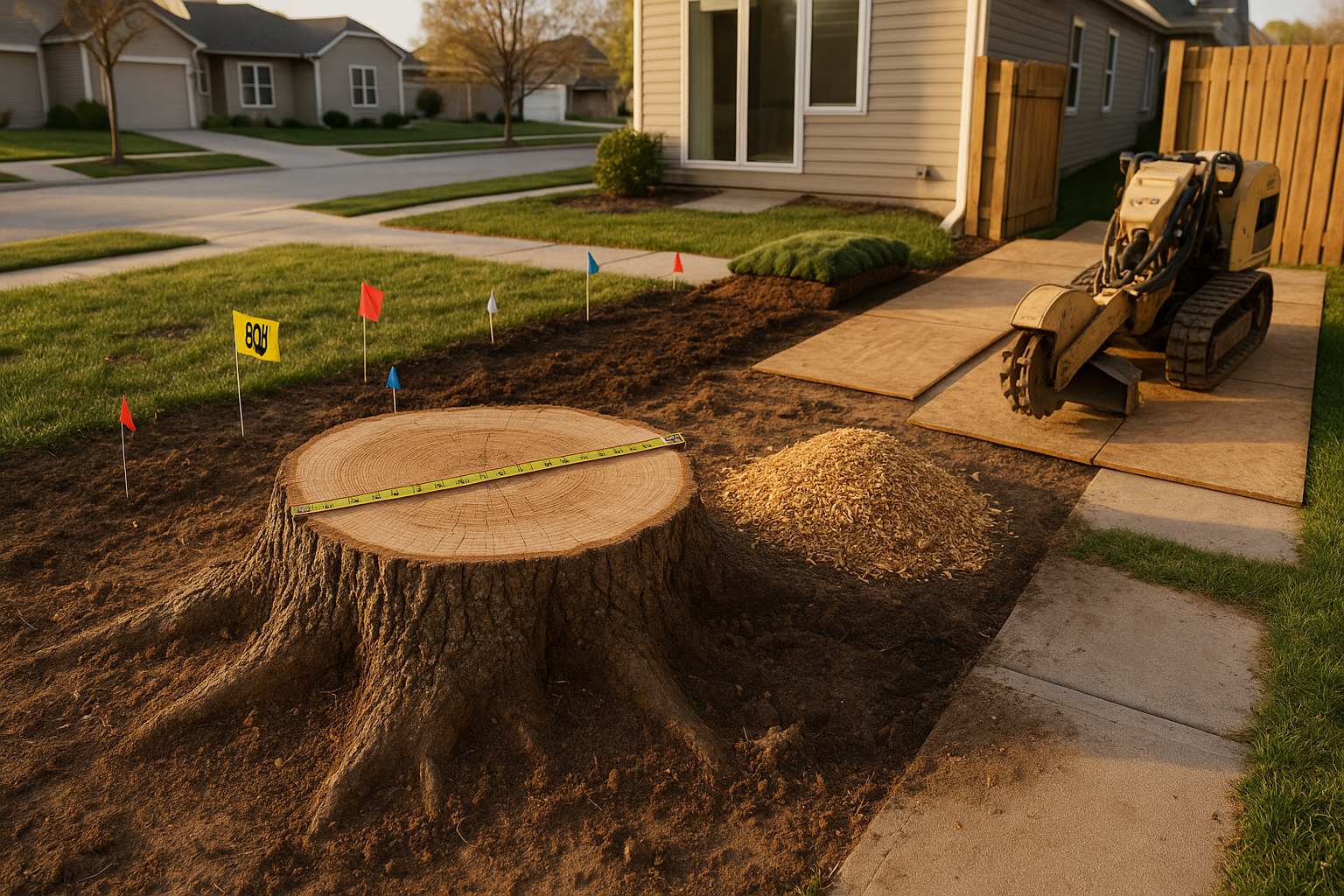
After the tree is down, we clean up everything—branches, logs, and debris. We can grind the stump too, backfilling the hole with wood chips or topsoil. That part is optional, but it keeps the yard from having a tripping hazard. Stump grinding Indianapolis is quick and leaves your lawn usable again.
Cost to Remove a Tree in Indianapolis
Pricing depends on size, complexity, access, and how close the tree is to structures or power lines. A small tree in an open yard is cheaper than a 60-foot oak hanging over your house. On-site assessments give accurate quotes. No two trees are the same in Avon or Plainfield.
Wildlife and Nesting
We try to work around nesting seasons when possible. But if a tree is an immediate hazard, we'll remove it with care. We're not in the business of harming wildlife—but your family's safety comes first.
After Removal: What's Next
Once the tree is gone, you've got options. Replace it with a resilient species suited to Central Indiana—oaks, maples (not silver), or serviceberries. We can advise on that too. Your yard will look different, but it'll be safer. And you won't be worrying every time the wind picks up.
If you're wondering when to remove a tree Indianapolis homeowners trust us for honest assessments and clear communication. We don't push removal if it's not needed. But if it is, we'll explain why and walk you through the process.
Schedule a tree risk assessment and quote with us today — we'll come out, look at your tree, and tell you what's really going on.
FAQs
What are the top signs a tree should be removed in Indianapolis?
More than 50% dead canopy, trunk cracks, fungus at the base, leaning with soil heave, or roots damaging your foundation or sidewalk.
Do I need a permit to remove a tree in Indianapolis or my neighborhood?
If the tree is in the public right-of-way, contact Indianapolis DPW Urban Forestry. HOAs may also require approval—check your neighborhood rules.
Is winter the best time to remove a tree here?
Winter is great because frozen ground minimizes lawn damage and access is easier. But if a tree is hazardous, remove it right away.
How much does tree removal cost in Indianapolis?
It depends on size, location, and complexity. We give free on-site quotes so you know exactly what you're paying for.
Can a severely leaning tree be saved, or is removal mandatory?
If the lean is recent and the roots have lifted soil, removal is usually the safest call. A qualified arborist can assess.
Can you remove a tree close to my house, fence, or utility lines?
Yes. We use controlled rigging and cranes to safely remove trees in tight spaces. We also coordinate with utilities for trees near power lines.
What should I do if a storm damages my tree?
Stay away from hanging limbs, and call a professional for an assessment. Hidden cracks can make the tree fail later.
Can treatments save my ash tree from emerald ash borer?
Only if caught early—before 30% canopy dieback. After that, removal is the practical option.
Will you grind the stump and restore the area?
Yes, we offer stump grinding and cleanup as part of the service.
How long does a typical tree removal take?
Most residential removals take a few hours to a full day, depending on size and complexity.
Will my homeowners insurance cover storm-related tree removal?
Often yes, if the tree damaged a structure. Check your policy. We can help document the damage for your claim.
What happens to the logs and branches after removal?
We haul everything away. You can keep firewood if you want, but we'll take care of the rest.
Need one crew for the whole property?
Next-day irrigation and single-source landscaping, hardscape, tree, and handyman service across greater Indianapolis. Free estimates.