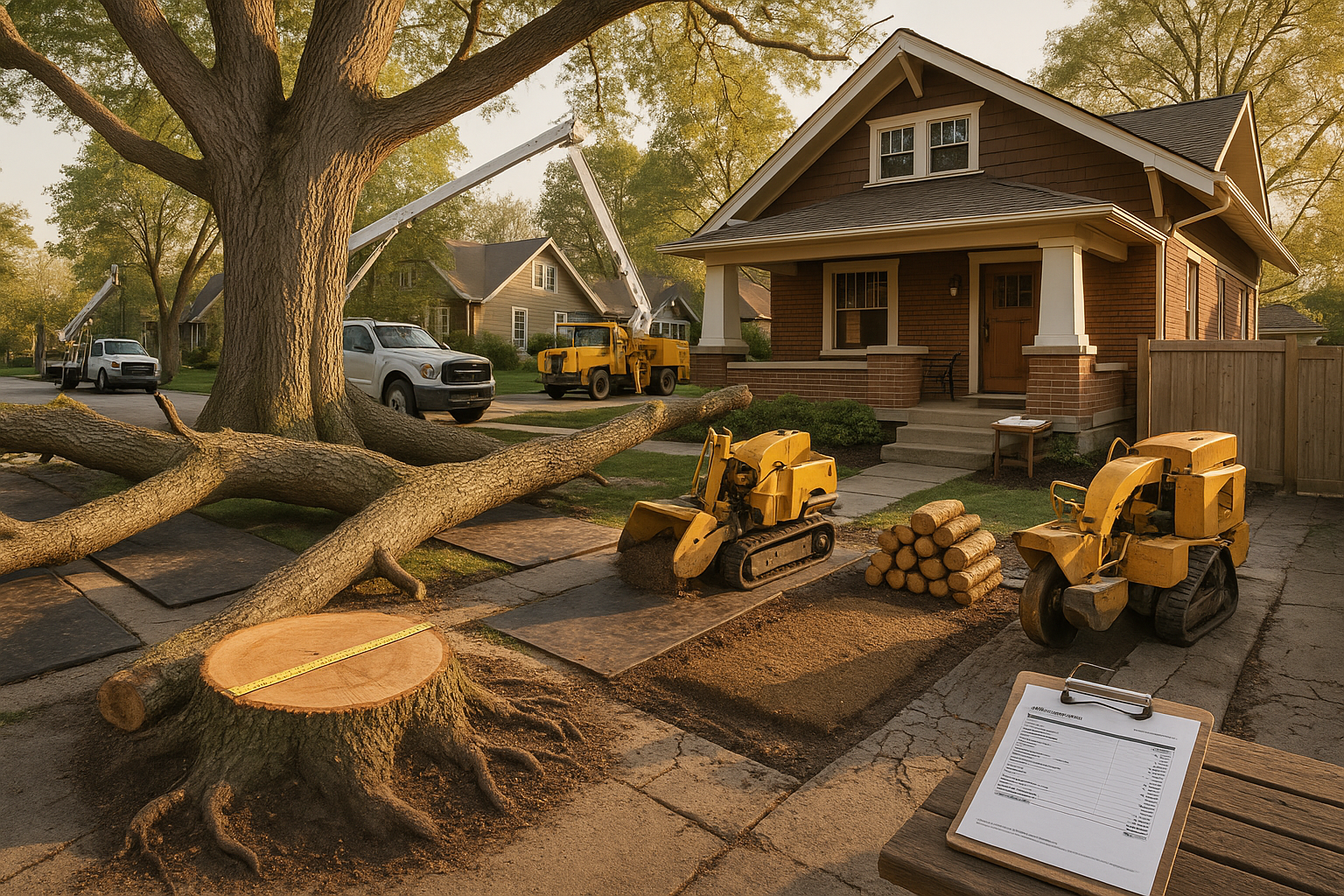
My buddy Matt lives over in Meridian-Kessler, in one of those 1920s bungalows with a giant silver maple so big you can see it from three blocks away. Last spring, after a week of heavy rain and a late ice burst, that tree dropped a limb the size of a compact car onto his driveway—missed his truck by maybe six inches. Insurance covered the carport repair, but suddenly every time a wind kicked up, he’d stare at the rest of that maple and wonder what it would cost to just bring the whole thing down. And honestly? He isn’t alone. Tree removal cost in Indianapolis can feel like a black box until you start calling around, and the numbers you hear can swing wildly.
First things first: here’s what you’re probably looking at if you’re dealing with a private-property tree in good health, with decent access. A small tree—think ornamental pear or a young dogwood, under 20 feet—usually runs $300 to $700. Medium trees, between 20 and 40 feet, like a mid-sized ash or a soft maple, will likely cost $650 to $1,400. Large trees, the 40-to-70-footers that dominate so many Indy neighborhoods (hello, Broad Ripple oaks and Zionsville sycamores), range $1,200 to $2,500 and up. If you’ve got a true monster—a cottonwood along Fall Creek over 70 feet tall, or a double-trunk silver maple leaning over a garage—pricing can easily climb past $4,500 once you factor in a crane or special rigging. But raw height is only part of the story.
What really drives the price up (or down)
Tree removal is one of those things where the final number is mostly about risk and access, not just the size. A dead ash—and we have thousands of them around Indy thanks to the emerald ash borer—costs more to take down than a live one because the wood is brittle and unpredictable. Hardwoods like oak and sugar maple are denser and heavier than a soft silver maple or cottonwood, which means more cutting time and heavier limbs to rig. Then there’s the tree’s lean. If it’s leaning toward your house or your neighbor’s fence, crews will likely need to piece it down in small sections, often with a rope and pulley, which chews up hours.
You also have to consider where the tree sits. In neighborhoods like Irvington or Butler-Tarkington, narrow side yards and detached garages can mean no truck access within 50 feet of the trunk. If they can’t get a bucket truck close, they might need a crane, and that alone can add $300 to $1,200 to the bill. Soft ground? Midwestern soil in a wet spring can turn into a sponge, and running heavy equipment across a soft lawn without ground protection mats will leave ruts that’ll make you cringe. Mats and careful equipment routing keep the yard intact, but they also add time. We always tell people that if your lawn looks like a golf course after a tree job, you hired the right crew.
Stump work and what it really costs
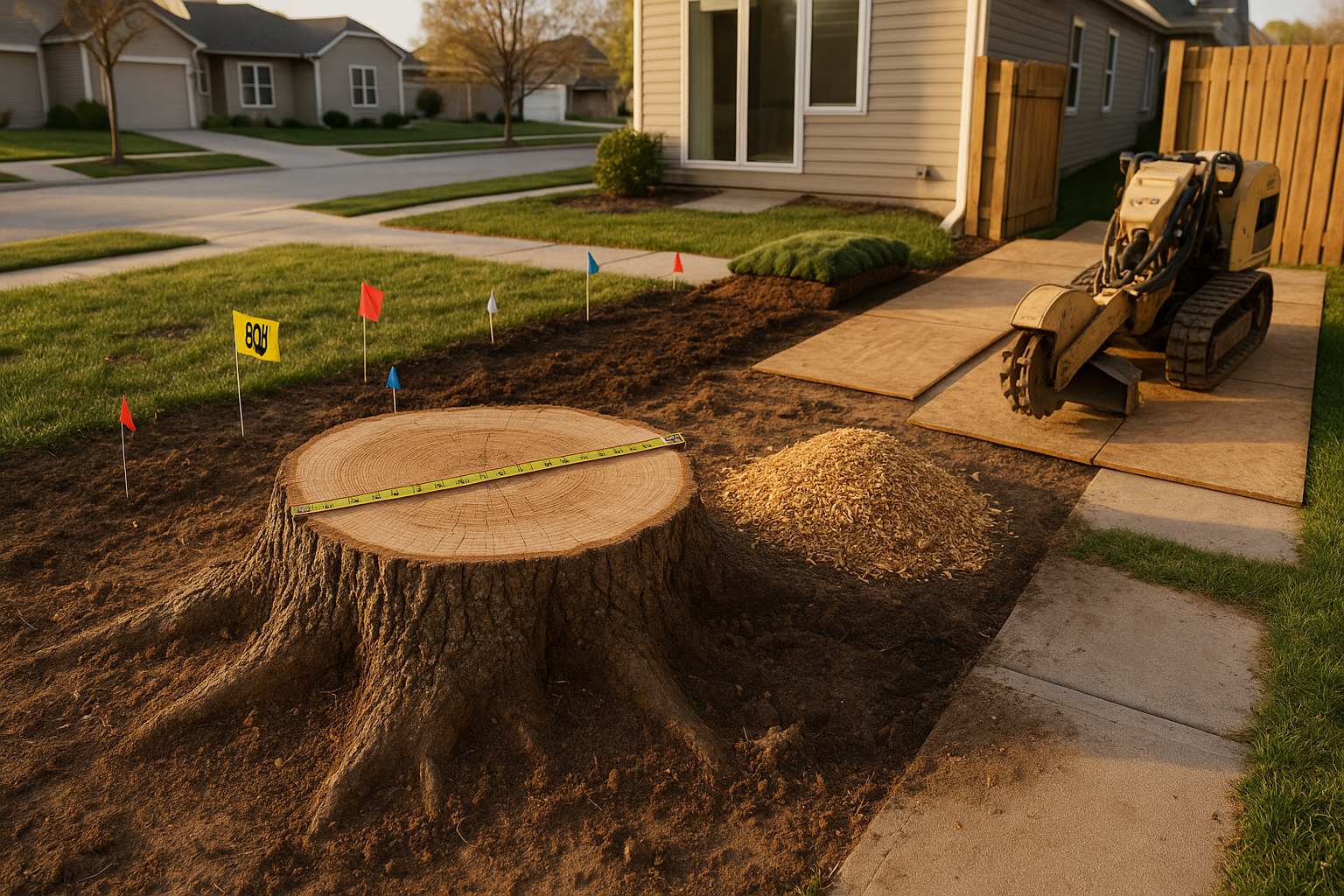
Most removal quotes don’t include stump grinding by default—you have to ask. In central Indiana, grinding goes for around $3 to $8 per inch of stump diameter, measured at the widest point. An 18-inch maple stump might run you $75 to $150, but a 40-inch remnant of that monster silver maple? You’re looking at $200 to $400 easily, maybe more if the roots are thick and snarled. And stump pricing usually stops at the grind; spreading the leftover chips, filling the hole with topsoil, and seeding takes extra unless spelled out. A few services include haul-away of the stump grindings, but don’t assume. When you get a tree removal cost in Indianapolis quote, ask if stump grinding is rolled in or line-itemed so you know exactly what you’re paying for.
Debris haul-away is another add-on that trips people up. If you want the wood left in manageable rounds for firewood, some crews will knock off a small amount. But usually, it’s easier—and sometimes cheaper—to let them chip the brush and haul everything off, because you’re not renting a truck and spending your Saturday making trips to the dump.
When nature goes sideways—emergency and storm pricing
Indy gets hammered by ice, wind, and the occasional derecho. When a big limb cracks over a bedroom or whole tree tips across the driveway at 2 a.m., it’s no longer about a planned removal; it’s an emergency. Emergency tree removal cost in the Indianapolis area nearly always carries a surcharge—20% to 50% is common, depending on whether it’s after-hours, how hazardous the situation is, and how many other calls the crews have. Demand spikes fast after a storm, and some outfits prioritize existing customers. If you can, having a relationship with a local tree service before disaster hits puts you ahead of the game.
Homeowners insurance can help if a fallen tree damages a covered structure, like your house or a garage. But if you’re trying to take down a dying tree before it falls, that’s almost always an out-of-pocket expense. Check with your carrier—some require photos and a written report from a certified arborist to prove the tree was a hazard.
Permits, power lines, and the right-of-way puzzle
Do you need a permit to remove a tree on your own property in Marion County? Usually, no—private-property trees don’t require a city permit. But if the tree is in the public right-of-way, like between the sidewalk and the street, the city gets a say, and you’ll need to work through their process. Historic districts have their own rules, too, and some HOAs around Fishers and Carmel can be sticklers about tree removal and replacement. When in doubt, measure from your property line or the nearest curb. And if the tree is anywhere near power lines, AES Indiana may need to get involved—sometimes they’ll de-energize lines temporarily, or they might require you use a line-clearance-qualified crew. You’ll also want to call 811 before any stump grinding or deep root work so nobody hits a buried gas or fiber line.
When tree removal opens up your whole landscape
Often, taking down a big tree isn’t just about the tree—it’s about what you can do with the space afterward. A shady side yard that’s been dirt for a decade might suddenly get enough sun for sod or a new planting bed. As a landscaper, we see this all the time in older neighborhoods like Greenfield or Brownsburg: once a wide canopy is gone, the light shifts, and homeowners start thinking about a fresh landscape design. But timing matters. If you’re planning to seed or sod, coordinate the stump grinding and soil remediation before you call in the landscape crew. Leaving a stump-filled crater with just chips on top will create a soft spot that sinks later, which leads to thin grass and muddy patches. A quality tree removal outfit will level the stump area and backfill with clean soil—a small step that makes a huge difference when you’re ready to put down new plants.
Concrete and roots: a combo that hits the wallet
Sometimes the reason you’re removing a tree is because its roots have already cracked your sidewalk or heaved your driveway. And here’s where concrete comes in. If the stump and surface roots are right up against a patio or walkway, you might need to plan for concrete repair after the tree is out. We’ve seen homeowners in Avon and Plainfield pull out an old maple only to find a three-foot section of driveway that’s suddenly crumbling. When a company offers both tree service and concrete work, you can bundle the jobs—imagine not having to juggle two different contractors and hope their schedules line up. It’s worth asking your removal crew if they handle small concrete patches or recommend someone who does, because that can save you weeks of limbo.
A handyman for the little surprises
Even the cleanest tree removal can leave behind a punch list of small fixes: a fence board that got tweaked, a section of landscaping fabric torn up by a root, a downspout extension that got bumped out of alignment. A handyman is great for these. Rather than calling five different numbers, some property crews—ours included—can knock out those tiny repairs the same week. For example, if a stump grinder nicked a corner of your wood fence, or a root pushed up a brick paver, having someone who can reset that paver or patch the fence is a relief. It’s the kind of attention to detail that keeps your yard from looking like a construction zone for two months.
How to compare quotes without pulling your hair out
Here’s where a lot of people get stuck: they get three quotes and the numbers are all over the place. One is $900, another is $2,300, and the third guy just says, “We’ll figure it out.” A good quote is detailed. It should list the specific tree, whether it’s a full removal or just a trim, the method (crane? sectional dismantle?), how they’ll protect your lawn, what they do with the stump, and what’s included for haul-away. If one quote is way lower, ask what’s missing. Could be no stump work, no debris removal, or they’re assuming you’ll let them drop the tree in your neighbor’s yard (not ideal). We wrote a whole guide on signs a tree needs to come down in Central Indiana that helps you figure out if you even need removal in the first place—sometimes a heavy trim is all you need, and that’s a different price entirely.
And no, you can’t just “top” a tree to save money. Topping creates more problems than it solves—weak regrowth, disease, and an ugly silhouette. A trusted arborist won’t recommend it. If a crew suggests topping a large hardwood, that’s a red flag.
Getting the real number—without the guesswork
Every yard is different. The best way to nail down an actual tree removal cost in Indianapolis is to have someone walk the property with you. At IndyGreen, we don’t charge to come out and look—that’s standard for a lot of local crews. A quick on-site assessment lets us see access points, assess the tree’s condition, talk through your options (keep the wood? remove the stump immediately or wait?), and give you a written, itemized quote that breaks down every piece. No vague numbers, no surprise add-ons after the job starts. If you’re in Indianapolis, Lawrence, Carmel, Fishers, or any of the surrounding areas, it’s a no-pressure way to get clear on what you’re looking at. You can grab a spot on our schedule or jump right to the quote form if you’re ready to move forward.
Need one crew for the whole property?
Next-day irrigation and single-source landscaping, hardscape, tree, and handyman service across greater Indianapolis. Free estimates.