My buddy Mike stood in his backyard in Broad Ripple last spring, rain still spitting, watching water pool up against his foundation like it was trying to sneak inside. He’d already regraded twice, added a downspout extension, and still—puddle city. A French drain finally fixed it. But before he got there, he had to wade through a lot of half-baked advice and sticker shock. If you’re in the same boat, here’s a straight-up breakdown of what a French drain costs in Indianapolis, why prices land where they do, and how to make sure you’re not just moving water from one spot to another.
So, What’s a French Drain and Why Indy Yards Need One
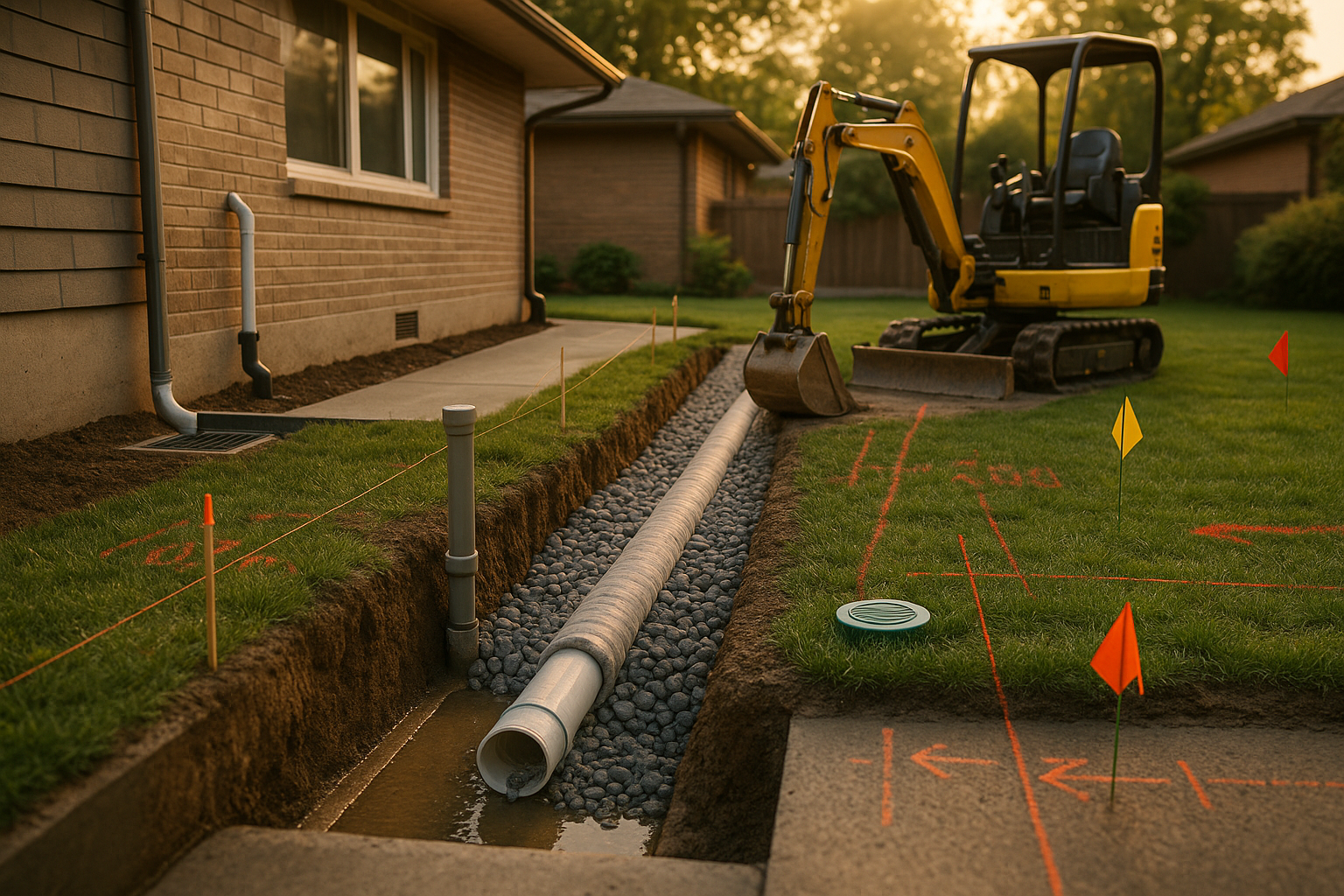
A French drain isn’t some fancy gadget. It’s a gravel-filled trench with a perforated pipe at the bottom, all wrapped in fabric. Groundwater seeps in, flows down the sloped pipe, and gets carried away—usually to a pop-up emitter in a low spot, a dry well, or the storm sewer if your town allows it. Here in Indianapolis, where the soil is dense clay and glacial till (you know that gray, sticky stuff that turns to concrete in summer), water just sits. Our average 42 inches of rain a year, with spring storms that dump buckets, can turn flat side yards into swamps. A French drain gives that water a path out. If you want to geek out on why Indy clay is such a pain, check out our piece on Indiana clay soil drainage problems.
What You’ll Actually Pay for French Drain Installation in Indianapolis
Let’s cut to it. In Indy, a typical yard French drain runs $35 to $65 per linear foot. That’s for an exterior, properly sloped trench with rigid PVC, non-woven geotextile, and washed #57 stone. Smaller jobs might have a minimum charge around $1,800 to $3,500—because nobody’s bringing a crew and a mini-excavator to dig twenty feet. For a longer side-yard run (say 50 to 120 feet), expect $2,500 to $7,800 or more. Interior basement edge systems can cost more, because you’re breaking concrete and dealing with sump connections. I’ve seen quotes climb to $100 per foot when the trench has to go deep, the ground is full of roots, or you need extensive sod replacement.
The Stuff That Drives the Price Up (or Down)
The big factors: how long, how deep, and what’s in the way. A short, shallow trench with easy access for a mini-excavator is on the lower end. Add depth, tight fence gates, or slopes, and labor hours climb. Our local soil is heavy clay—sometimes with rock—so digging is slower. And obstacles? They’re everywhere.
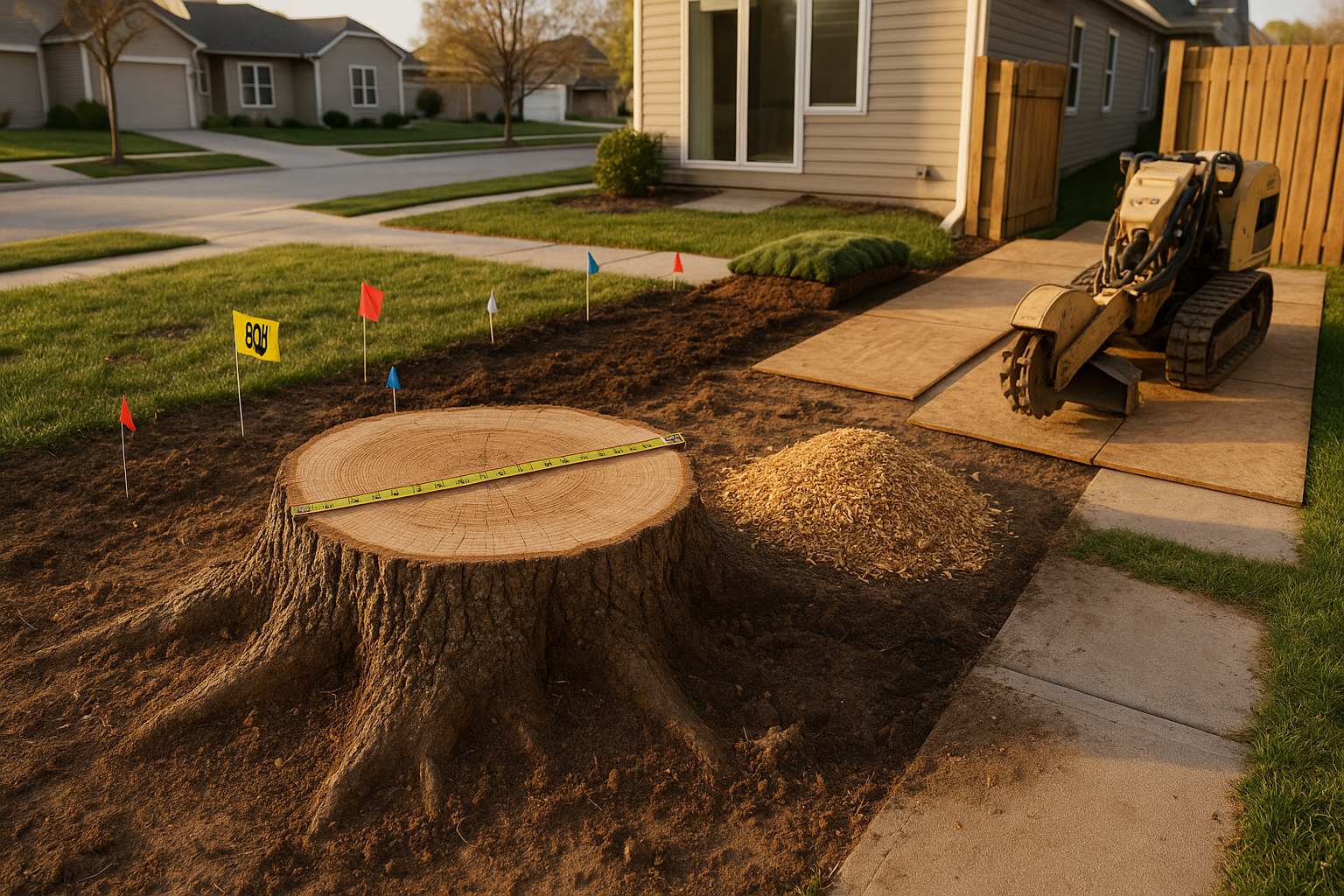
Roots from mature trees—we’re talking old oaks in Meridian-Kessler—can double your headache. Sometimes you need a tree service to take out invasive roots before we even start digging. That adds a few hundred bucks, but it’s better than strangling your drain later.
If the drain has to cross a sidewalk, driveway, or patio, you’ll need a concrete contractor to saw-cut and make neat patches. That’s not DIY territory unless you want a lumpy mess. Good concrete work keeps your hardscape looking right and prevents tripping hazards.
Restoration is a biggie. After the trench is backfilled, a landscaper (or our crew, wearing that hat) can re-sod, seed and straw, or lay mulch so it blends in. You don’t want a muddy stripe for the next six months. Little things like tying in downspouts or adjusting gutter brackets might fall to a handyman. Even swapping out a pop-up emitter if it gets mowed over—handy stuff.
PVC or Corrugated? Material Choices That Actually Matter Here
Most folks want to save a buck, so they ask about corrugated pipe. It’s cheaper, but here’s the thing: in Indy’s freeze-thaw cycles, corrugated can flatten and lose its slope. Rigid PVC (SDR-35 or Schedule 40) costs more upfront—maybe $10–$20 extra per foot—but it holds shape, resists crushing, and you can flush it out with a hose if needed. Stick with non-woven geotextile and washed #57 stone. The fabric keeps silt out, and the angular stone makes a stable void for water to flow. Skip the cheap stuff.
Design Smarts for Indy’s Clay and Flat Lots
A French drain only works if it’s built right. Consistent slope is non-negotiable—about a 1% drop, which looks almost flat but moves water. Without it, water just sits. Our flat lots—hello, Fishers and Greenwood—mean you might need a deeper trench at the end, or a dry well if you can’t daylight. We always add cleanouts so you can flush the pipe if leaves or gunk get in. A pop-up emitter at the outlet costs $50–$150, installed, and it’s worth every penny for a clean finish.
Add-Ons: Catch Basins, Dry Wells, and Other Nice-to-Haves
If you’ve got surface water pooling in one spot, a catch basin or channel inlet can funnel it right into the drain. Downspout tie-ins keep roof runoff from dumping next to the foundation—about $200–$400 per tie-in, depending on the run. A dry well is basically a big hole filled with stone that stores water and lets it slowly soak in; in clay, it has to be oversized to work. Sump pump discharge lines can also be routed into the system.
Permits, Utilities, and Those HOA Surprises
Before anyone puts a shovel in the ground, call Indiana 811—it’s free and marks your gas, electric, and other lines. You’ll wait about two full working days. If you’re connecting to the storm sewer or cutting a curb, you’ll need city approval, and that can push your timeline by a week or more. In newer neighborhoods in Westfield or Zionsville, HOAs might have rules about visible emitters or drain outlets. Better to know before you dig.
How Long Until My Yard Is Back to Normal?
From the first phone call to a finished yard: expect 1–3 days of install after utilities are clear, plus a day or two for restoration to settle. You’ll see fresh straw or sod, and within a few weeks, it blends in. If rain turns the site to mud, we might pause—no sense tearing up your lawn worse.
Is a French Drain Actually the Right Fix? Or Should You Look at Something Else?
Sometimes all you need is a good regrade to roll water away, or longer downspout extensions. A French drain handles groundwater; surface grading handles sheet flow. In many Indy yards, you end up needing both—a gentle slope plus a drain along the foundation. If water’s only coming from one gutter, maybe a simple dry well or catch basin does the job. We’ll tell you straight.
Keeping It Working: Maintenance That Takes 10 Minutes
Check pop-up emitters after leaf drop, make sure cleanouts are accessible, flush the pipe with a hose every couple of years. That’s about it. A handyman can handle it if you’re not up for crawling around.
How We Do It at IndyGreen (and How to Get a Straight Answer on Cost)
We don’t do guesswork. When you call us, we’ll come out, shoot elevations, mark the route, and hand you a clear scope with real numbers. No surprises. While you’re at it, if drainage problems have you thinking about landscaping fixes beyond the drain, we’ve written about retaining walls in Fishers—because sometimes holding back soil is half the battle. If you’re tired of mopping up, head over to our quote form and pick a time. We’ll walk your yard together and sort out the best solution—not the most expensive one. For more on keeping your yard happy, check out our other articles.
Need one crew for the whole property?
Next-day irrigation and single-source landscaping, hardscape, tree, and handyman service across greater Indianapolis. Free estimates.